
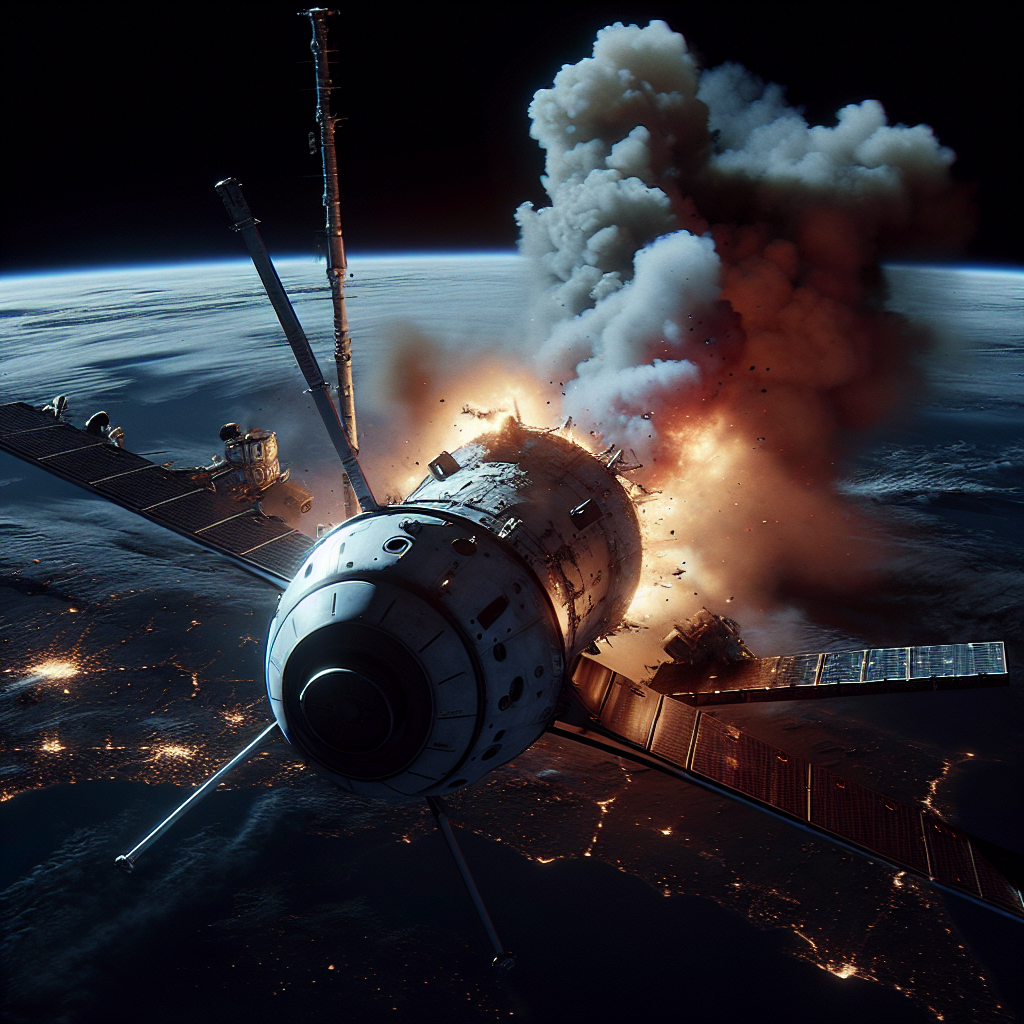
Starship Setback: Understanding the Challenges and Lessons from SpaceX’s Propellant Leak Incident
Space exploration has always been a frontier fraught with challenges and unpredictability. When SpaceX announced that its Starship had self-destructed following propellant leaks that led to fires and communication blackouts, the space-savvy world was keenly reminded of the risks involved in reaching for the stars. With Starship being one of the most ambitious projects in SpaceX’s arsenal, it’s essential to delve into the circumstances surrounding this incident and explore the broader implications for the future of space travel.
Introduction
The excitement surrounding SpaceX’s Starship program is palpable within the aerospace community and among the general public. As the company’s flagship project for Mars colonization, Starship represents a giant leap forward in reusability and payload capacity. However, the recent incident involving a self-destruction sequence after propellant leaks underscores the technical challenges still facing this cutting-edge project. In this article, we aim to provide a comprehensive analysis of the incident, examine its causes, and assess the potential impact on future missions.
The Event: What Happened?
On the surface, the news headlines were startling: SpaceX’s Starship had to be deliberately destroyed mid-test flight. As reports emerged, the following sequence of events was reconstructed:
-
Propellant Leaks Detected: During the pre-flight checks, minor leaks in the propellant system were observed. These were not initially deemed critical.
-
Ignition and Liftoff: Despite assurances of stability, the leaks persisted unnoticed, exacerbating as the Starship took flight.
-
Communications Blackout: Partway through the test, a blackout in the telemetry systems occurred. Teams lost vital live data streams that could have indicated worsening conditions.
-
Fires and Structural Damage: Leaked propellant caught fire, and despite automated systems’ attempts to address the issue, the damage was too extensive.
- Self-Destruct Command: With the Starship’s integrity compromised and the risk of an uncontrolled descent increasing, the decision was made to execute a self-destruct protocol to ensure safety on the ground and minimize environmental impact.
Understanding the Technical Aspects
The Role of Propellant Systems in Spacecraft
Propellants are the lifeblood of any rocket, providing the necessary thrust to escape Earth’s gravitational pull. In the case of Starship, a combination of liquid methane and liquid oxygen (CH4/LOX) is used:
-
Methane (CH4): Favored for its efficiency and potential to be in-situ resource utilized on Mars.
- Liquid Oxygen (LOX): Necessary to oxidize the methane and generate thrust.
Propellant System Challenges:
-
Cryogenic Storage: Both methane and oxygen need to be stored at extremely low temperatures, which presents a complex challenge in terms of insulation and plumbing.
- Leak Detection: In case of leaks, the volatile nature of these fuels means that any breach in containment can lead to catastrophic results.
Communication Systems in Spacecraft
Reliable communication is mission-critical for any space operation. The blackout experienced during the test was especially concerning, impacting the remote diagnostic capabilities essential for addressing in-flight anomalies.
Technology at Play:
-
Redundant Networks: Modern spacecraft employ multiple communication pathways to mitigate the risks of single-point failures. This event demonstrates that even robust systems can be strained under adverse conditions.
- Data Integrity: Loss of telemetry prevents the ground crew from making informed decisions, highlighting the need for advancements in autonomous rapid-response systems.
Implications for SpaceX and Future Missions
Lessons Learned
Every setback in space exploration offers valuable lessons:
-
Enhanced Diagnostics: SpaceX’s engineers will likely prioritize improving real-time diagnostics and remote repair capabilities within both propellant systems and communication networks.
-
System Resilience: Building more resilient infrastructures capable of withstanding unexpected stresses is key.
- Crisis Protocols: The efficient execution of the self-destruct protocol illustrates the importance of emergency preparedness.
Impact on the Starship Program
While the incident was a setback, it should be seen in the context of iterative design and testing, which is central to SpaceX’s rapid development model:
-
**Delay or Acceleration?: While there may be temporary delays in testing, the findings could accelerate developments in safety features.
- Investors’ Outlook: Such incidents often influence investor confidence, but SpaceX’s track record showcases its capability to bounce back and innovate.
Broader Impacts on Space Policy and Exploration
-
Regulatory Scrutiny: Incidents like this could lead to more stringent regulatory oversight, potentially affecting timelines for future launches.
-
Public Perception: Maintaining public interest and confidence is crucial for the support of commercial space ventures.
- International Collaboration: Failures and successes alike can influence international partnerships and policy directions.
Conclusion
In the realm of cutting-edge innovation, failure isn’t just a possibility—it’s a fundamental component of the journey towards success. While the Starship’s self-destruction following a propellant leak is a sobering moment, it offers pivotal insights that will undoubtedly guide SpaceX’s path forward. As challenges are overcome, each incident brings us closer to unlocking new frontiers, ultimately fulfilling humanity’s enduring dream to journey beyond Earth.
The bold vision of a future where humans inhabit multiple planets requires not just technical prowess but also resilience and the relentless pursuit of excellence—qualities that SpaceX has consistently embodied. As we anticipate the Starship’s next flight, the lessons from this event emphasize that every leap to the stars begins with undeterred determination on the ground.