
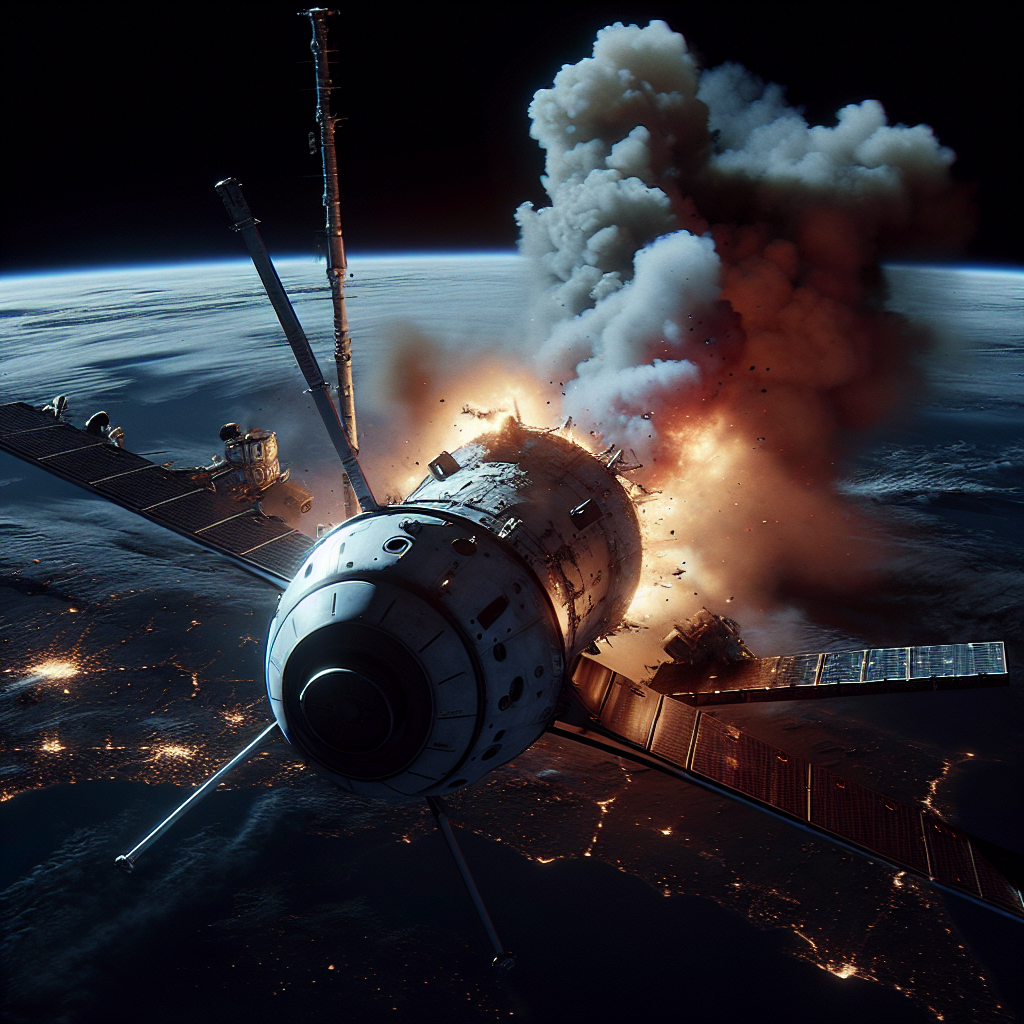
Starship’s Fiery Fate: Decoding the Propellant Leak Incident
In the realm of space exploration, SpaceX often captures the headlines, pushing the boundaries of what’s possible beyond our planet’s atmosphere. However, the recent incident involving SpaceX’s colossal Starship is a startling reminder of the challenges and unpredictability associated with pioneering technology. According to SpaceX, Starship self-destructed after propellant leaks caused fires and subsequent communications blackout. This revelation has sparked widespread intrigue and concern. What exactly transpired and what’s the way forward for SpaceX? Let’s delve deeper into the details.
The Prelude to Starship’s Ill-Fated Launch
The Starship, SpaceX’s next-generation spaceship designed to transport both astronauts and cargo to a range of destinations from the Moon to Mars and beyond, is one of the most ambitious projects ever undertaken by a private aerospace company. However, despite numerous successful tests, the recent incident highlights the challenges involved in developing cutting-edge space technology.
SpaceX’s Ambitious Starship Program
- Objective: Designed for deep-space missions.
- Capacity: Capable of carrying over 100 metric tons.
- Reusability: Built with the goal to be a fully reusable spacecraft.
The ambitious nature of the Starship program means that even minor setbacks are subject to intense scrutiny, given the project’s potential to reshape interplanetary travel.
Understanding the Incident
According to SpaceX, the self-destruction of Starship was a consequence of propellant leaks, which initiated fires and led to a communications blackout.
What Led to the Propellant Leaks?
The propellant leaks underscore the complex nature of the propulsion technologies involved in rocket launches. Typical causes can include:
- Material Fatigue: Over time, repeated exposure to extreme conditions can degrade material integrity.
- Manufacturing Defects: Even minute flaws in manufacturing can escalate into significant issues.
- Human Error: Mistakes during assembly or checks can lead to system vulnerabilities.
Understanding and identifying the root cause of such leaks is crucial for the future development of reliable space travel technology.
How Fires Resulted from the Leaks
When propellant leaks transpire, the potential for unintentional combustion arises. Factors that likely contributed include:
- Oxygen Presence: The propellants used in space travel are often highly volatile in the presence of oxygen.
- High Pressure: Engineered for high-thrust outputs, the pressurized systems can exacerbate leaks, increasing the likelihood of fires.
The Communications Blackout
The communication blackout that ensued following the fire might have been caused by:
- System Overload: Fire-related damage to the spacecraft’s communications systems.
- Power Redirection: Emergency systems attempting to divert power to critical functions can disable non-essential systems like communications.
Consequences of the Self-Destruction
The self-destruction was a precautionary measure to ensure safety. However, this incident poses several consequences for SpaceX:
- Financial Impact: Setbacks in schedule and added costs for diagnostics and repairs.
- Public and Investor Confidence: Potentially decreased, leading to tighter scrutiny on future launches.
Safety Protocols and Design Enhancements
In the wake of incidents like this, investigations lead to enhanced safety protocols and engineering designs:
- Robust Design Changes: Modifications to prevent a recurrence of similar issues.
- Enhanced Monitoring Systems: Improved detection mechanisms for leaks and potential fire hazards.
The Path Forward for SpaceX
Despite this turbulent event, SpaceX remains poised to overcome challenges through rigorous testing and technological advancements. The company will likely focus on:
Comprehensive Investigation and Analysis
SpaceX is expected to undertake a detailed investigation to comprehend the underlying causes and prevent a recurrence. Key actions include:
- Root Cause Analysis: Detailed study to pinpoint failure points.
- Data-Driven Adjustments: Using test data to inform modifications.
Continued Innovation and Testing
SpaceX’s commitment to innovation will likely not waiver. Expect to see:
- Enhanced Prototypes: Refinement of the Starship design based on lessons learned.
- Increased Simulation Trials: Rigorous simulations to test the new designs before actual launches.
Conclusion: Space Exploration and Its Challenges
The incident involving SpaceX’s Starship isn’t merely a setback; it’s a stern reminder of the intricacies and risks imbued in space exploration. While the self-destruction following the propellant leak highlights vulnerability, it also underscores SpaceX’s commitment to prioritizing safety.
Embracing failures as learning opportunities aligns with SpaceX’s philosophy throughout its journey—from developing the Falcon series to the Starship. As one of the forerunners in exploring the cosmos, SpaceX’s determined momentum toward creating a multi-planetary future remains unwavering. Enthusiasts, skeptics, and all observers await the next evolutionary step in this extraordinary venture, learning and adapting side-by-side with this colossal space trailblazer.
In an industry where each failure becomes a stepping stone for monumental achievements, SpaceX’s Starship experience is only a momentary evaluation in their ambitious odyssey to conquer space.
By understanding past shortcomings and continually evolving, SpaceX strives to carve a path to a deeper, more boundless exploration of the stars!