
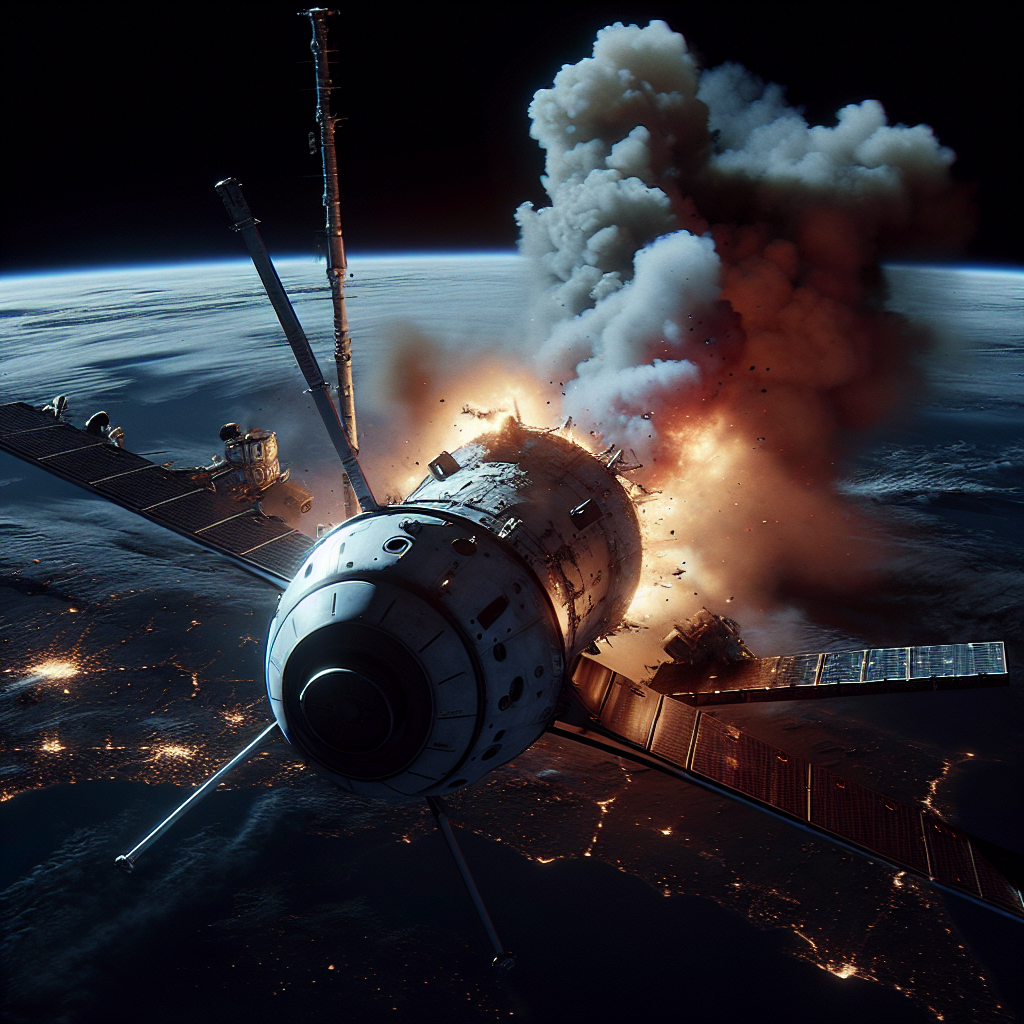
SpaceX’s Unforeseen Challenge: The Starship Self-Destruct Incident Explained
The world of space exploration is not for the faint-hearted; it’s an arena where pioneering aspirations meet unpredictable challenges. This duality was sharply highlighted when SpaceX’s Starship, a beacon of futuristic space travel, self-destructed following a series of disastrous events. Understanding what unfolded can offer insights into not just the specific incident, but also the broader challenges faced by those pushing the boundaries of space travel.
Introduction: Navigating the Unpredictable Cosmos
SpaceX, under the visionary leadership of Elon Musk, has been on a relentless quest to make interplanetary travel an everyday reality. Central to this mission is the Starship, a fully reusable spacecraft designed to carry both crew and cargo to a variety of destinations, including Mars. However, the recent self-destruction of a Starship prototype due to propellant leaks and subsequent fires serves as a humbling reminder of the complexities and risks involved in space exploration.
The stakes couldn’t be higher. With SpaceX at the forefront of the “Space Race 2.0”, understanding the intricate details of this incident is not just about dissecting a failure; it’s about paving the way for future successes. Here, we’ll delve deeper into the events that led to the self-destruct, the immediate ramifications, and the lessons that can ignite innovative solutions for tomorrow.
Unpacking the Incident: What Triggered the Self-Destruct?
The Chain of Events
The sequence began with propellant leaks—an issue that can often be managed with sophisticated control systems but proved catastrophic in this scenario. These leaks resulted in fires, which subsequently led to a communications blackout.
- Propellant Leaks: The propellant storage and management systems encountered a critical failure, leading to leaks that became the catalyst for fires.
- Fires: The unchecked leaks ignited, transforming manageable issues into a cascading series of failures.
- Communications Blackout: The ensuing damage caused a loss of control and visibility from mission control, culminating in the decision to trigger a self-destruct mechanism.
The Decision to Self-Destruct: A Preventive Measure
In aerospace technology, a self-destruct mechanism is often built into systems to minimize risk. When a spacecraft threatens to veer off course catastrophically, self-destruction is a method to protect surrounding areas and ensure any onboard incidents do not escalate into larger threats.
SpaceX’s Commitment to Safety:
- Protects crew and community.
- Ensures accountability and containment of unpredictable elements.
- Sets a protocol for handling emergency situations swiftly and efficiently.
The Underlying Causes: Propellant System Failures
Understanding Propellant Leaks
Not just a SpaceX-specific issue, propellant management is a critical concern across the aerospace industry. Here’s why leaks occur and the potential improvements that might prevent future incidents:
- Design Flaws: Structural weaknesses or pressure mismanagement within fuel systems.
- State-of-the-Art Monitoring: Improved sensors and AI for real-time leak detection.
- Routine Checks and Balances: Regular maintenance and safety checks can catch vulnerabilities early on.
The Role of Fires
In space operations, fire safety is both a glaring concern and an implicit assumption of risk. Addressing the underlying causes of fires can help ameliorate these risks.
- Fire Containment Systems: Advanced suppression systems to limit fire spread.
- Material Analysis: Improved heat-resistant materials to reduce combustibility.
The Impact of Communication Blackouts
The Criticality of Communication in Space Missions
Communication is the lifeline of spacecraft operations. Without it, navigating complex emergencies becomes nearly impossible.
- Technological Redundancies: Backup systems to ensure constant contact with mission control.
- Noise Reduction Techniques: To filter and interpret signals from various onboard systems.
Aftermath and Future Pathways
SpaceX’s Response and Strategic Adjustments
SpaceX has always highlighted its innovative approach to addressing setbacks. Their response post-incident is illustrative of how companies in this domain adapt and evolve.
- Transparent Investigation: Full disclosure on findings to understand the failures.
- Focus on Training: Rigorous staff preparation for handling emergent situations with precision.
- Enhanced Design Protocols: Immediate corrective actions to address design and operational flaws.
Learning for the Future: The Broader Implications
This incident sends ripples through the industry, prompting a recalibration of protocols among peers and stakeholders.
- Industry Wide Collaboration: Sharing insights to benefit all organizations aligned with similar missions.
Anticipating the Unexpected:
The critical takeaway from this incident is the necessity of preparing for unpredicted scenarios. Building resilient systems is of paramount importance.
Conclusion: Elevating Space Exploration
Despite the setbacks, the drive towards a sustainable and operational Starship continues unabated. Each stumbling block is a stepping stone that bolsters SpaceX’s resolve to make space travel an eventual commonplace reality. These challenges shape not only the present but also guide the innovations that lie on the horizon of humanity’s journey into the stars. The Starship incident illuminates the innate risks of space exploration yet also marks a turning point for learning, refining, and advancing towards an era of interplanetary existence.