
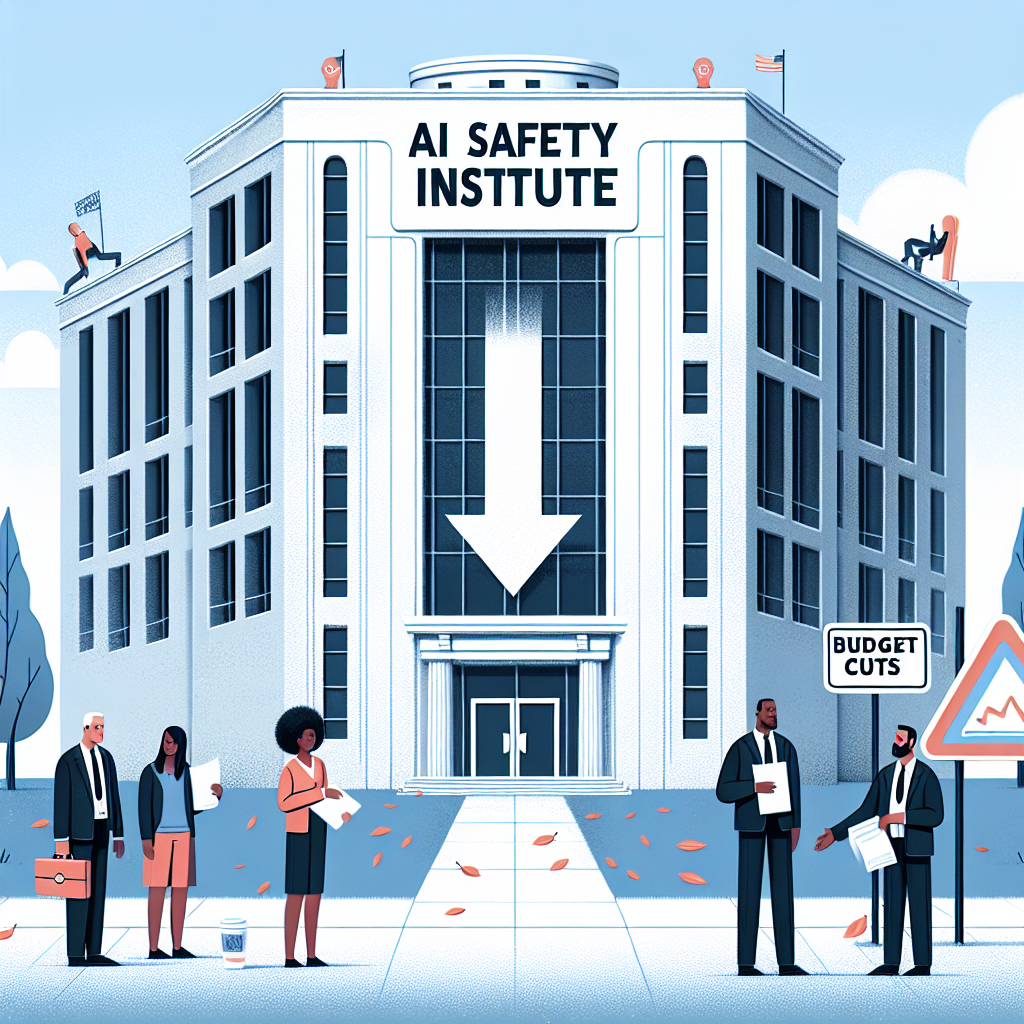
The Looming Budget Cuts: What They Could Mean for the US AI Safety Institute
In recent years, the rapid advancement of artificial intelligence (AI) has triggered both excitement and apprehension in different corners of the world. As AI technologies continue to evolve, discussions about their safety and ethical implications have become more significant. At the heart of this conversation is the US AI Safety Institute, a pivotal organization tasked with ensuring that AI systems are safe and reliable. However, recent discussions around potential budget cuts to the Institute have stirred a wave of concern. This article delves into the potential impact of these cuts and why the role of the US AI Safety Institute is more important now than ever.
Understanding the Mission of the US AI Safety Institute
The US AI Safety Institute was established with a clear mandate — to oversee the safety, regulation, and ethical deployment of AI technologies across various sectors. This includes:
- Conducting research to identify possible risks associated with deploying AI technologies.
- Drafting guidelines and recommendations for safe AI practices.
- Collaborating with experts from academia, industry, and government agencies.
- Monitoring compliance with established safety standards.
Why AI Safety Matters
AI has become an integral part of modern life, from facial recognition and autonomous vehicles to healthcare solutions and financial algorithms. However, as the technology becomes more woven into the fabric of society, so too do the risks associated with it.
- Risk of Bias: AI systems, if not properly trained, can perpetuate and even amplify existing biases.
- Privacy Concerns: With the extensive data AI systems require, there are significant concerns regarding privacy and data protection.
- Operational Failures: In high-stakes environments, AI malfunctions can lead to severe consequences.
- Autonomous Weapons: AI in military applications poses ethical and existential risks.
These concerns highlight the critical role the Institute plays in safeguarding societies from potential AI-related mishaps.
The Catalyst for Budget Cuts
The discussions on budget cuts for the US AI Safety Institute did not emerge from a vacuum. Several factors contribute to this development:
- Political Shifts: With changes in administration, government priorities often shift, affecting funding allocations.
- Economic Pressures: Budget reallocations necessitated by economic slowdowns can result in reduced funding for secondary areas.
- Competing Interests: With other urgent societal needs, such as healthcare and infrastructure, AI safety might not always be prioritized.
Impact of Reduced Funding
Potential budget cuts could affect the US AI Safety Institute in various ways:
-
Research Limitations:
- Reduced research capacity could hinder advancements in AI safety technologies.
- Challenges in keeping pace with fast-evolving AI landscapes.
-
Decreased Collaboration:
- Slowed collaboration with international AI safety organizations.
- Less engagement with industry leaders, hampering comprehensive safety guidelines.
- Operational Challenges:
- Potential personnel layoffs leading to reduced expertise within the Institute.
- Delay in updating safety protocols and recommendations.
The Wider Implications
For the Tech Industry
Budget cuts in the US AI Safety Institute could lead to a ripple effect throughout the tech industry:
- Increased Liability Risks: Companies may face more frequent safety incidents, leading to lawsuits and damage to reputation.
- Innovation Stalls: As risks increase, companies might become more cautious, slowing down innovation.
- Competitive Disadvantage: With other countries investing heavily in AI safety, the US could fall behind in the global AI race.
For Society
- Public Trust: Reduced oversight may result in heightened public skepticism towards AI technologies.
- Inadequate Safety Measures: Communities are more likely to experience the adverse effects of AI errors or abuses.
- Missed Opportunities: The potential societal benefits of safe AI might not be fully realized.
What Can Be Done?
Considering the potential consequences, it’s crucial to explore solutions to these impending budget cuts:
Advocacy and Awareness
- Public Engagement: Increase public awareness about the importance of AI safety through campaigns and educational content.
- Policy Advocacy: Encourage stakeholders and the public to advocate for continued funding and support for AI safety initiatives.
Collaborative Approaches
- Private-Public Partnerships: Foster partnerships between government entities and private tech companies to pool resources for AI safety.
- International Cooperation: Collaborate with global AI safety organizations to share knowledge and resources.
Strategic Reallocations
- Efficient Budgeting: Optimize the Institute’s existing resources to prioritize critical safety projects.
- Targeted Investments: Encourage funding for high-risk sectors to ensure safety mechanisms are robust and effective.
Conclusion
The potential budget cuts facing the US AI Safety Institute could have far-reaching consequences, not just for the organization itself but for the broader implications surrounding AI deployment. As AI continues to shape our world, ensuring its safe and ethical use is paramount. Whether through advocacy, collaboration, or strategic investments, stakeholders must work together to secure the necessary support and funding for AI safety initiatives. The stakes are high, and the time to act is now.
In championing the cause of AI safety, we are investing not only in the technology itself but in the future we envision for generations to come.