
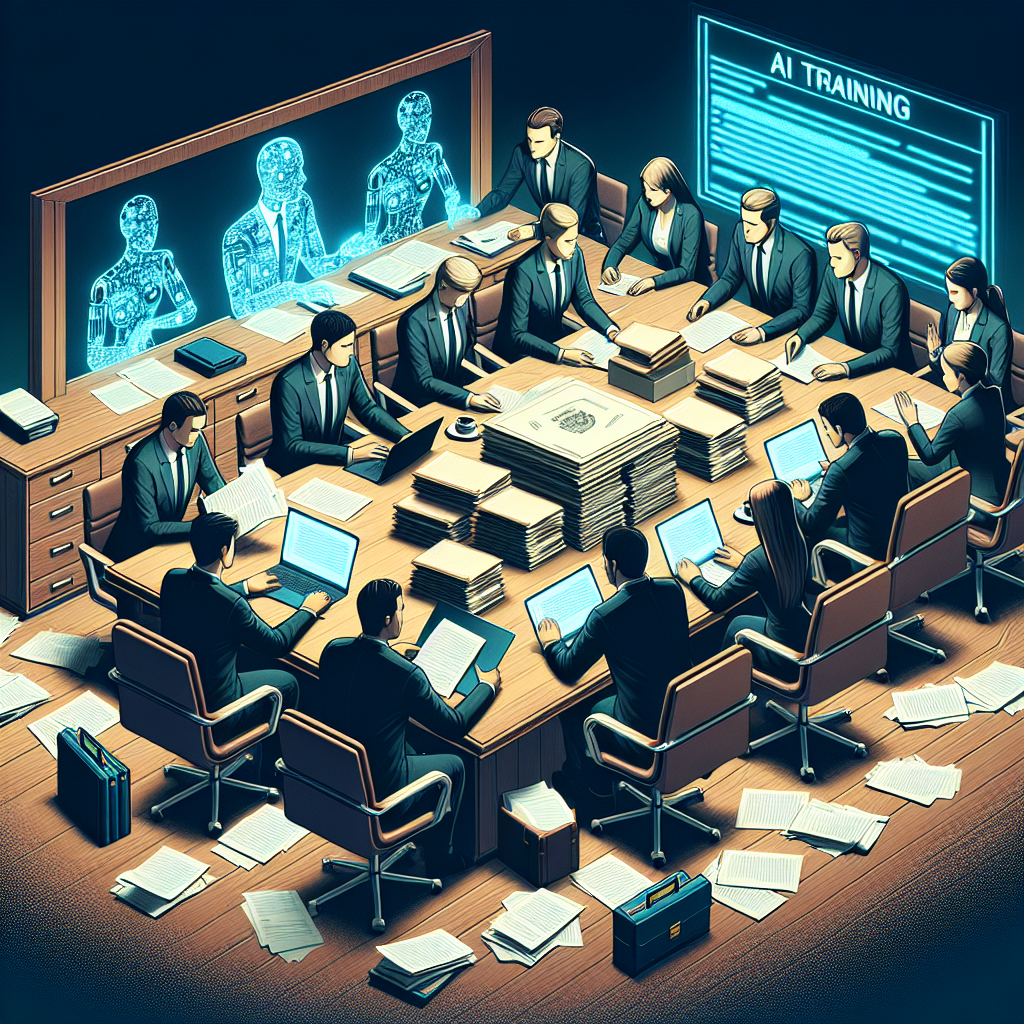
Inside the Legal Labyrinth: Meta Employees Contemplated Using Copyrighted Content for AI Training
Introduction: The Digital Age Debate
In the rapidly evolving landscape of artificial intelligence, technology companies often find themselves in the midst of complex ethical and legal debates. One such debate recently surfaced as court filings exposed discussions among Meta (formerly Facebook) employees about the potential use of copyrighted content for AI training. This revelation not only throws light on the internal deliberations at the tech giant but also raises broader concerns about the acceptable boundaries of AI training data. In this article, we will delve into the implications of these discussions, the legal risks involved, and what this means for the future of AI ethics.
What Court Filings Reveal About Meta’s AI Training Methods
In recent years, artificial intelligence has taken significant strides, primarily powered by data-driven models. Access to vast amounts of data is crucial for training these models to improve accuracy and functionality. However, the source and type of this data have come under intense scrutiny.
AI’s Need for Data and the Copyright Conundrum
- Vast Data Requirements: AI systems, especially those related to NLP (Natural Language Processing) and image recognition, require diverse and extensive datasets for training.
- Copyrighted Content as a Resource: Copyrighted material—be it text, images, videos, or audio—offers a rich source of information that could potentially refine these AI models.
While using this data could enhance AI functionalities significantly, it’s crucial to examine whether it was done within legal frameworks. Court documents have suggested that Meta employees acknowledged using copyrighted content might contravene copyright laws, sparking a complex dialogue around data usage rights.
Copyright Law and AI: Navigating the Gray Area
What is Copyright Law?
- Protection of Original Works: Copyright law is designed to protect original works of authorship including literary, dramatic, musical, and certain other intellectual works.
- Exclusive Rights: It gives the creator exclusive rights to use, modify, and distribute their work.
Legal Risks and Ethical Implications
Using copyrighted material for AI training without permission could potentially infringe on the rights of the content creators. This poses several legal and ethical challenges:
- Potential Lawsuits and Settlements: Companies like Meta could face lawsuits for unauthorized use of copyrighted works.
- Moral Responsibility: Beyond the legal aspects, there’s an ethical responsibility towards respecting the intellectual property rights of creators.
Meta’s Strategy: Exploring Legal Pathways
Internal Discussions and Strategies
From the court filings, Meta employees have been noted to discuss strategies to navigate through the legal complexities:
-
Seeking Licensing Agreements: Engaging in licensing agreements could offer a viable path where AI developers and content creators could mutually benefit.
- Creative Data Solutions: Developing AI algorithms that minimize dependence on copyrighted material by leveraging public domain works or content with open licenses.
Industry Standards and Precedents
Meta isn’t alone. The entire tech industry faces similar conundrums in the use of copyrighted content for AI development.
-
Looking at Precedents: Examining prior cases where other tech companies have been challenged on similar grounds can provide insights into possible solutions.
- Industry Collaboration: Engaging with other stakeholders to develop industry-wide standards could help manage AI training data more ethically and legally.
The Road Ahead: Balancing Innovation and Ethics
The Future of AI Training Models
To pave a path forward, Meta along with other AI developers can adopt several strategies:
- Transparent Policies: Establish transparent policies regarding data sourcing for AI training.
- Ethical AI Frameworks: Implement ethical AI frameworks that balance innovation with respect for intellectual property rights.
Engaging with Policymakers
Engaging in constructive dialogues with policymakers can also help shape clear guidelines and laws around AI training and copyright usage:
-
Advocating for New Policies: Advocate for policies that consider the evolving landscape of technology and intellectual property.
- Collaborative Efforts: Foster a closer relationship between tech companies and governments to co-create a sustainable ecosystem for AI development.
Conclusion: Navigating the AI-Copyright Nexus
The discussions uncovered in the court filings are more than just a glimpse into Meta’s internal strategy about AI; they trigger a broader conversation about the intersection of technology, law, and ethics. As AI continues to integrate more deeply into our daily lives, understanding and resolving these challenges becomes imperative. Companies, content creators, legal entities, and policymakers need to collaboratively navigate this nexus to ensure responsible AI that respects intellectual property while fostering innovation.
In this digital age, acknowledging and addressing these challenges not only protects creators but also builds a robust foundation for the future of AI—transparent, ethical, and revolutionary. By examining past practices and anticipating future developments, the tech industry can lead by example, ensuring that AI evolves in a way that respects and upholds the principles of creativity and originality.