
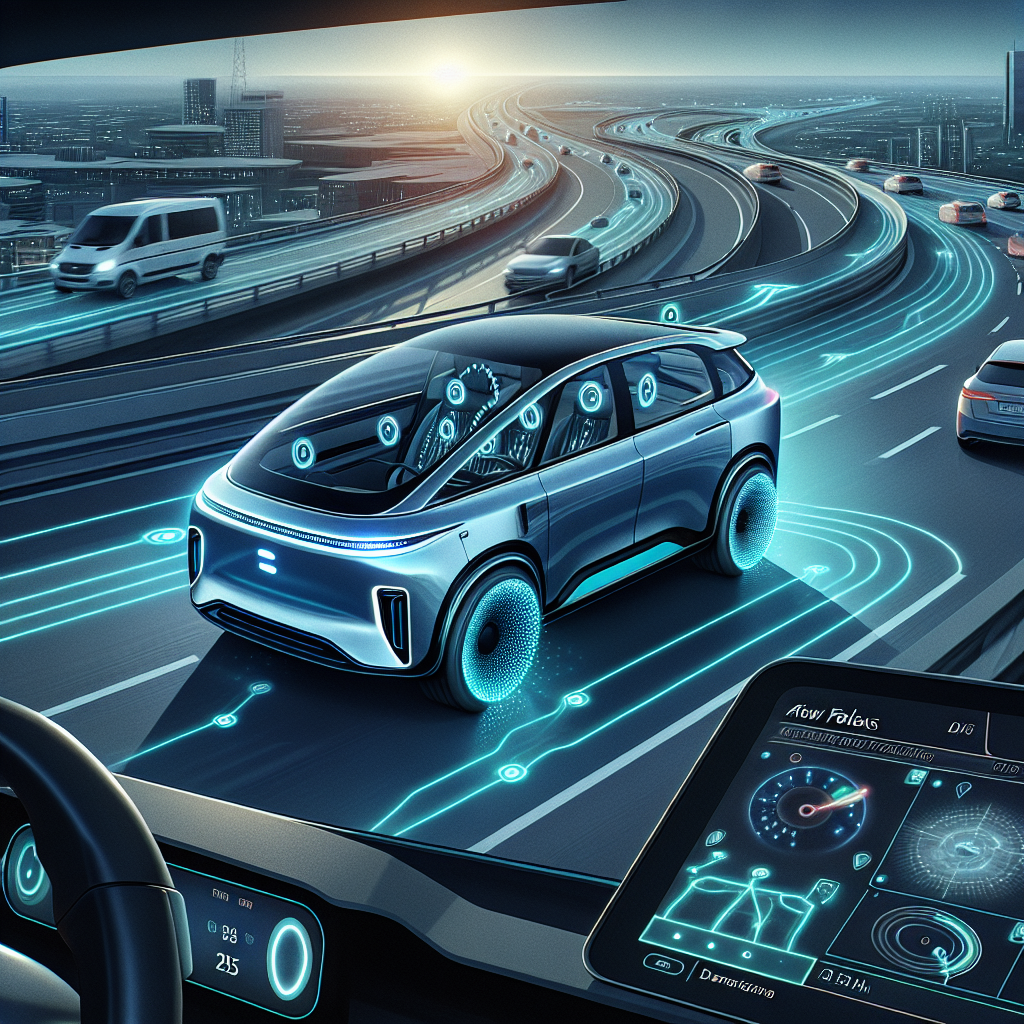
Rivian to Unveil Hands-Free Highway Driver Assist System: What This Means for Future Mobility
The historic march towards autonomous driving takes another significant stride as Rivian, an American electric vehicle automaker, announces its plans to launch a hands-off highway driver assist system in just a few weeks. This development is not just an incremental step for Rivian but also a giant leap for the auto industry as a whole, indicating a future where cars are smarter, safer, and more capable of driving themselves. As the anticipation builds, car enthusiasts, tech aficionados, and the general public are eager to learn more about what Rivian’s hands-off highway driver assist entails and how it will shape the future of mobility.
Understanding Rivian’s Innovative Hands-Off System
What is Rivian’s Hands-Off Highway Driver Assist?
Rivian’s hands-off highway driver assist is a state-of-the-art feature designed to transform highway driving into an automated, seamless experience. Much like Tesla’s Autopilot or General Motors’ Super Cruise, Rivian’s system promises to take over the reins of driving, enabling the car to operate independently without continuous human intervention.
Key features include:
- Automated lane-keeping and lane changes
- Adaptive cruise control with speed adjustments based on traffic conditions
- Emergency braking and collision avoidance
This system is particularly focused on enhancing safety and convenience during long highway drives, relieving drivers from the fatigue and monotony of steering through lengthy stretches.
How Does it Work?
Rivian’s hands-off system relies on a blend of advanced technologies:
- Camera systems to monitor the environment
- Radar sensors for detecting objects and maintaining safe distances
- Machine learning algorithms that continually learn and adapt to various driving conditions
By integrating these technologies, Rivian aims to ensure that the vehicle can handle obstacles, stay aware of road signs, and react to any sudden changes in traffic conditions.
Rivian’s Technological Edge
The Role of AI and Machine Learning
Artificial Intelligence and Machine Learning play a pivotal role in enabling Rivian’s hands-off highway driver assistance. The system uses deep neural networks to predict vehicle paths, recognize obstacles, and understand the dynamic road environment.
Advantages of AI Integration:
- Improved decision-making based on real-time data processing
- Continuous improvement with over-the-air updates
- Enhanced safety through rapid identification and response to hazards
Comparison with Competitors
While Rivian enters a competitive landscape dominated by Tesla, Ford, and GM, its approach shows unique advantages:
- Focus on reliability: With a comprehensive suite of sensors and AI-driven software, Rivian emphasizes seamless performance.
- User experience: Enhancements in the user interface offer ease of access and control for everyday users.
This hands-off feature is expected to not only match but potentially surpass current market offerings through consistent advancements and updates.
Implications for Rivian and the Automotive Industry
Market Impact and Competitiveness
Rivian’s new feature is poised to elevate its brand in several ways:
- Enhanced market share owing to increased value provided by automation
- Prominence in tech-driven market that attracts tech-savvy and eco-conscious consumers
In a rapidly evolving market, Rivian’s announcement is a game-changer that could set a standard for future autonomous vehicle developments.
Long-term Benefits and Advancements
With this high-end technology, Rivian not only aims to improve highway safety but also envisions a future where fully autonomous driving is commonplace:
- Reduction in road accidents by minimizing human error, one of the leading causes of accidents.
- Optimized traffic flow through efficient, uniform driving patterns.
- Reduction in driver fatigue and stress, thus improving overall road experience.
Consumer Concerns and Solutions
Despite the excitement, potential users might harbor concerns regarding safety, privacy, and the reliability of the system. Addressing these issues involves:
- Robust testing and validation to ensure the system’s reliability.
- Transparent data policies to manage privacy.
- Setting practical user expectations with clear guidelines on system limitations and proper usage.
Getting Ready for Rivian’s Hands-Off Highway Driving
Preparation and Adoption
For existing and potential Rivian owners, preparing for this new technology involves:
- Software updates to enable the feature, accessible via over-the-air upgrades.
- Familiarization sessions using online resources and dealership demonstrations.
- Feedback and community engagement for shared experiences, tips, and best practices.
Looking Forward: The Future Outlook
Rivian’s bold step underscores the automaker’s commitment to innovation. As the hands-off highway driver assist system becomes operational in the coming weeks, Rivian sets the precedence for the future frontier where cars and technology coalesce into an era of sophisticated, autonomous transportation. The upcoming launch is not just another feature—it’s a movement towards smarter vehicular ecosystems.
In conclusion, Rivian’s forthcoming hands-off technology sets an exciting trajectory for both the company and the automotive world. It paves the way for safer highways and heralds a pivotal transformation as we venture further into the age of autonomous vehicles. Stay tuned, as the roads are about to get smarter and destinations more accessible than ever before!