
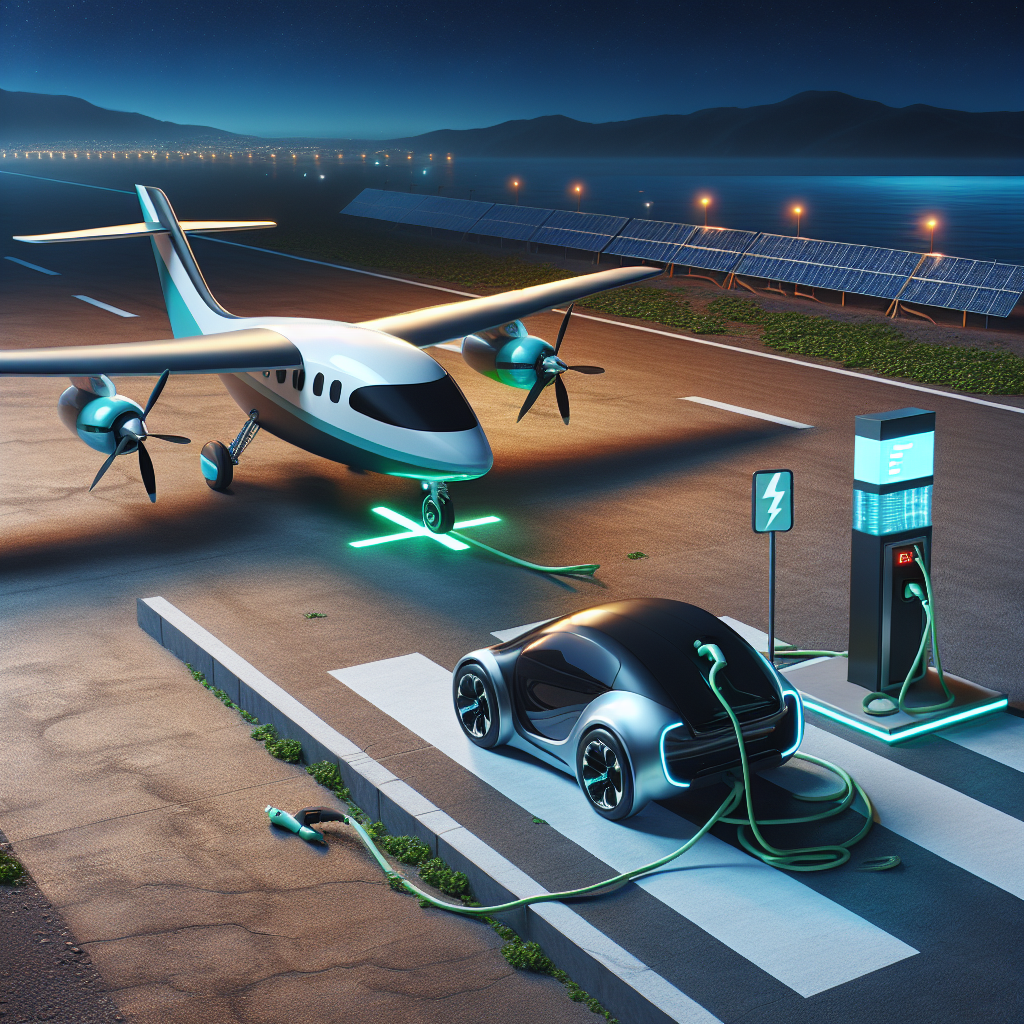
Soaring into the Future: Beta Technologies Pioneers Electric Flight While Hyundai Takes a Turn with Tesla’s Charging Port
Electric vehicles have taken the automotive industry by storm, but the transition to more sustainable modes of transportation is by no means limited to just roads. In the aeronautical sphere, Beta Technologies is leading the charge towards a cleaner future, with groundbreaking innovations in electric flight. Meanwhile, in the electric vehicle (EV) market on the ground, Hyundai’s embrace of the Tesla charging port demonstrates both the challenge and potential of evolving EV infrastructure.
From the sky to the streets, let’s dive into how these industry giants are shaping the future of transportation.
Beta Technologies: Revolutionizing the Skies with Electric Aircraft
The aviation sector has long been a significant contributor to carbon emissions, sparking interest in sustainable flight solutions. Beta Technologies, a Vermont-based aerospace manufacturer, has emerged as a leader, betting on electric vertical takeoff and landing (eVTOL) aircraft.
Cutting-Edge eVTOL Designs
Beta Technologies’ eVTOL aircraft stand out due to their innovative designs. These planes are not only efficient but also significantly quieter than conventional aircraft. Some key features include:
- All-electric propulsion systems: Ensures zero emissions during flight, drastically reducing the carbon footprint.
- Advanced rotor technology: Provides smooth and quiet operation, minimizing noise pollution in urban environments.
- Modular battery systems: Facilitates quick swaps and reduces downtime, ensuring aircraft are ready for flight at a moment’s notice.
Impacts on Urban Air Mobility
As cities grow denser, urban air mobility (UAM) is becoming a hot topic. eVTOLs offer a new way for people and cargo to move efficiently:
- Congestion reduction: By taking advantage of vertical spaces, eVTOLs alleviate traffic woes on city streets.
- Increased accessibility: Offering connections to remote locales and underserved areas, making air travel more inclusive.
- Sustainability: A move towards clean skies aligns with global initiatives to cut carbon emissions.
Beta’s Collaborations in Electric Aviation
Partnerships are crucial for technological progress. Beta Technologies collaborates with various stakeholders to enhance eVTOL viability:
- Logistics companies: Utilizing eVTOL aircraft for package delivery, optimizing logistics networks.
- Airports and infrastructure developers: Supporting the establishment of charging and landing facilities known as "vertiports."
- Regulatory bodies: Working with the FAA and other global agencies to ensure safety standards are met.
Hyundai’s Strategic Move: Tesla Charging Port Adaptation
While Beta Technologies champions the skies, Hyundai is making waves on the ground. The recent decision by Hyundai to integrate Tesla’s charging port into their EVs comes with both setbacks and lessons.
Understanding the Tesla Charging Port
The Tesla charging port, known as the NACS (North American Charging Standard), has been widely praised for its:
- High efficiency: Capable of delivering fast charging with minimal energy loss.
- Streamlined design: Offers universal connectivity across newer Tesla and many other EV models.
- Network availability: Extensive network coverage, enhancing ease of access for users.
Hyundai’s Adoption Challenges
Despite the advantage of Tesla’s robust infrastructure, Hyundai faces unique challenges:
- Compatibility issues: Retrofitting existing models with the charging port may require significant overhauls.
- Supply chain constraints: Ramping up production of compatible components in a timely manner isn’t without its hurdles.
- Brand differentiation: Aligning too closely with Tesla may overshadow Hyundai’s unique brand identity.
Learning from Hyundai’s Approach
Hyundai’s adaptation strategy highlights lessons for the broader industry:
- Innovation is key: Staying agile amidst technological advancements is crucial in the competitive EV market.
- Consumer trust: Adopting widespread infrastructure can enhance customer confidence and loyalty.
- Collaboration over competition: Leveraging another company’s technology can foster cooperation and accelerate widespread EV adoption.
A Unified Future of Electric Transportation
With Beta Technologies revolutionizing flight and Hyundai adapting to Tesla’s established standards, these developments signal a promising future for sustainable transportation. As technology evolves, both aerospace and automobile industries have the potential to:
- Enhance efficiency: Through advanced technologies and improved infrastructure.
- Drive inclusivity: Making electric transportation more accessible and affordable for all.
- Reduce environmental impact: Through net-zero emissions and eco-friendly practices.
Conclusion
The journey towards a sustainable future in transportation is driven by innovation both in the sky and on the ground. Beta Technologies and Hyundai exemplify how businesses can navigate complex challenges to create forward-thinking solutions that benefit society. As passengers and consumers, we stand on the cusp of a new era where seamless, electric, and environmentally friendly travel is possible.