
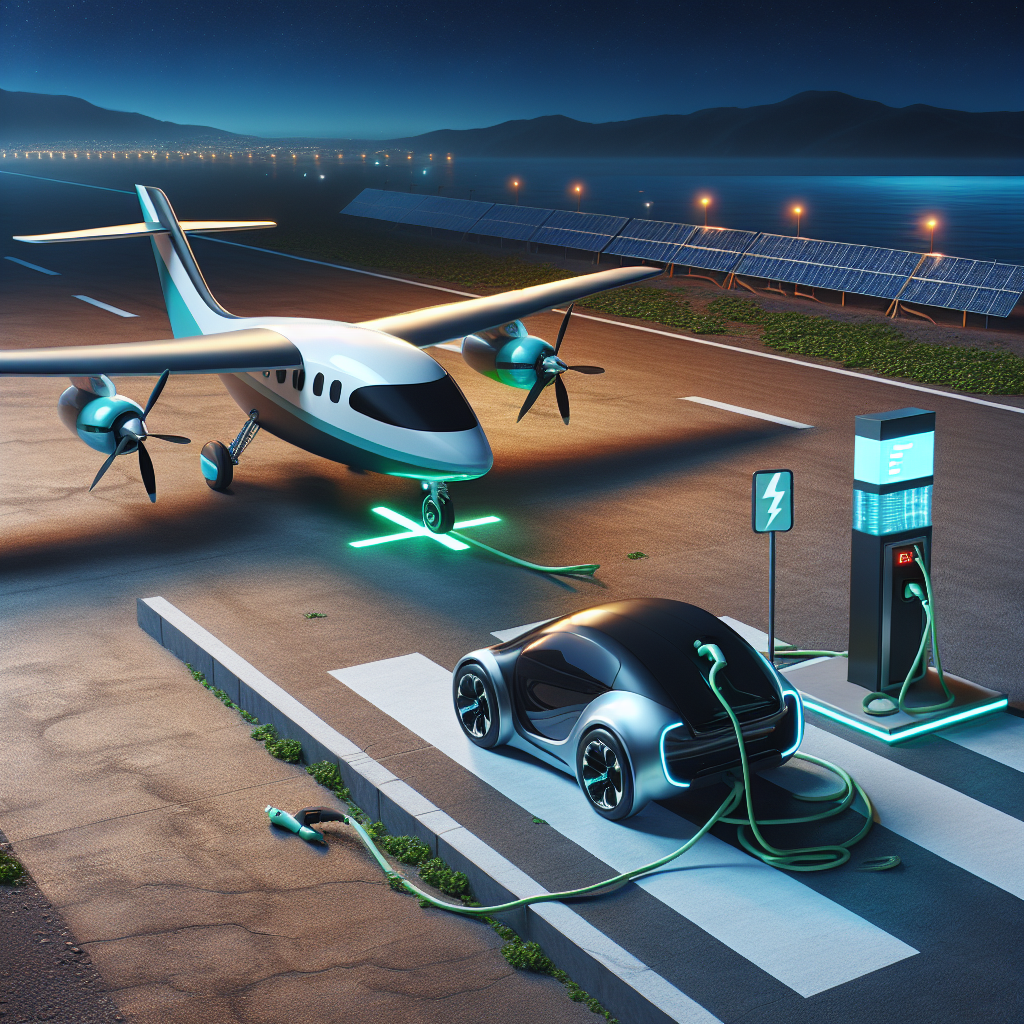
Taking Flight: Beta Technologies’ Leap into Electric Aviation and Hyundai’s Troubled Charging Port
In the burgeoning world of sustainable transportation, emerging trends and technologies are steering the narrative toward an electrified future. A pivotal player in this dynamic landscape is Beta Technologies, a company pioneering electric aviation solutions. As we explore this aeronautical innovation, we will also delve into how automotive giant Hyundai‘s latest development with the Tesla charging port has stirred curiosity and critique. Both cases represent significant crossroads in electric vehicle technology, with varied approaches and challenges.
The Dawn of Electric Aviation: Beta Technologies’ Vision
Beta Technologies is at the forefront of revolutionizing how we view air transport. Their work is centered around developing electric vertical takeoff and landing (eVTOL) aircraft, a feat poised to transform short-haul travel significantly. Here’s how Beta is making waves in the sky:
Mission and Milestones
Established in 2017 by Martine Rothblatt and Kyle Clark, Beta Technologies is embarking on a mission to reshape the aviation industry by pioneering sustainable electric flight solutions. Their vision emphasizes:
- Reducing carbon emissions: By replacing traditional fossil fuel-based aircraft with electric alternatives.
- Noise reduction: Offering quieter operations, crucial for urban environments.
- Operational efficiency and lower costs: Creating aircraft that reduce operating expenses over time.
Beta Technologies has marked some notable milestones on its journey:
- Successful test flights of ALIA-250, their state-of-the-art eVTOL.
- Collaborations with major players like UPS and Blade Urban Air Mobility.
- Securing substantial funding from backers who believe in the potential of electric aviation.
ALIA-250: A Cutting-Edge Aircraft
The ALIA-250 is Beta’s flagship aircraft, designed to meet the rising demands for sustainable aviation. Here’s a look at its innovative features:
- Range and Speed: Capable of covering 250 nautical miles at speeds of up to 170 mph.
- Cargo and Passenger Variants: Versatile design able to transport goods or accommodate up to six passengers.
- Sustainability Focus: Powered by an all-electric propulsion system, drastically reducing carbon emissions.
Challenges and Opportunities
While Beta Technologies is making significant strides, electric aviation faces intrinsic challenges:
- Battery Technology: Current battery capabilities limit the range and payload compared to traditional fuel-based systems.
- Regulatory Hurdles: Attaining certification from aviation authorities presents a path interwoven with stringent regulations.
- Infrastructure Development: Establishing the necessary charging and maintenance infrastructure remains a critical undertaking.
Future Prospects
Beta Technologies continues to charge toward an all-electric aviation future with optimism and innovation. The company is driven by a vision of integrated, sustainable air mobility solutions that seamlessly connect diverse regions, adding value to the urban transit ecosystem.
Hyundai’s Approach to the Charging Conundrum: Tesla Charging Port Predicament
On the ground, Hyundai’s recent decision to explore integration with Tesla’s established charging network has sparked insightful dialogues. Let’s dissect the company’s ambitious yet challenging move.
Collaboration and Compatibility
Hyundai’s willingness to adopt Tesla’s North American Charging Standard (NACS) was initially seen as a visionary step toward universal compatibility. The benefits include:
- Expanded Access: Hyundai’s EVs could potentially utilize Tesla’s extensive Supercharger network.
- Innovation Drive: Encourages a unified approach to EV charging standards.
- Customer Convenience: Immediate advantages in alleviating range anxiety for Hyundai EV owners.
Where the Strategy Falls Short
Despite its potential, Hyundai’s strategy faced multiple setbacks:
- Technical Discrepancies: Integrating NACS while ensuring compatibility with existing Hyundai platforms has proven technically complex.
- Promise vs. Performance: The expected efficiency gains of adopting Tesla’s charging infrastructure have not matched real-world experiences.
- Brand Dissonance: Aligning closely with Tesla could blur Hyundai’s brand identity in an increasingly competitive EV market.
Moving Forward with Lessons Learned
Hyundai is not stepping back but rather recalibrating its strategic approach. Here are crucial lessons and potential paths forward:
- Innovate In-House: Invest in proprietary solutions that address specific user needs.
- Collaborative Synergy: Engage with multiple stakeholders for a comprehensive charging approach.
- Consumer-Centric Design: Ensure end-to-end convenience and charging efficiency to win consumer trust.
Hyundai’s experience underscores the complexities that arise in unifying diverse technologies within the evolving electric vehicle ecosystem.
The Electric Future: Convergence and Divergence
Both Beta Technologies and Hyundai represent the dual poles of innovation in air and road transportation respectively, each tackling the electrification challenge with unique methodologies.
Converging Goals
What ties Beta Technologies and Hyundai together is their commitment to a greener, more sustainable future. While their sectors differ, both pursue:
- Carbon Footprint Reduction: Seeking to significantly reduce emissions via electronic propulsion.
- Technological Innovation: Harnessing state-of-the-art technologies to redefine transportation modalities.
Diverging Paths
Though they share a commitment to innovation, their approaches diverge distinctly:
- Market Focus: Beta’s focus is regulatory and technological integration within aviation, while Hyundai navigates a complex consumer market.
- Infrastructure Dependency: Hyundai requires a robust existing network, whereas Beta has to develop nascent infrastructure from the ground up.
Conclusion: Navigating the Electrified Road Ahead
In essence, the journey of Beta Technologies and Hyundai mirrors the broader navigation of electric transportation — complex yet promising. The adaptation of electric propulsion in transportation is not without obstacles. Still, the potential for pioneering new frontiers remains enticing. As Beta Technologies continues its ascent, and Hyundai retools its strategies, the glowing horizon of a sustainable transit future draws nearer with each charge.