
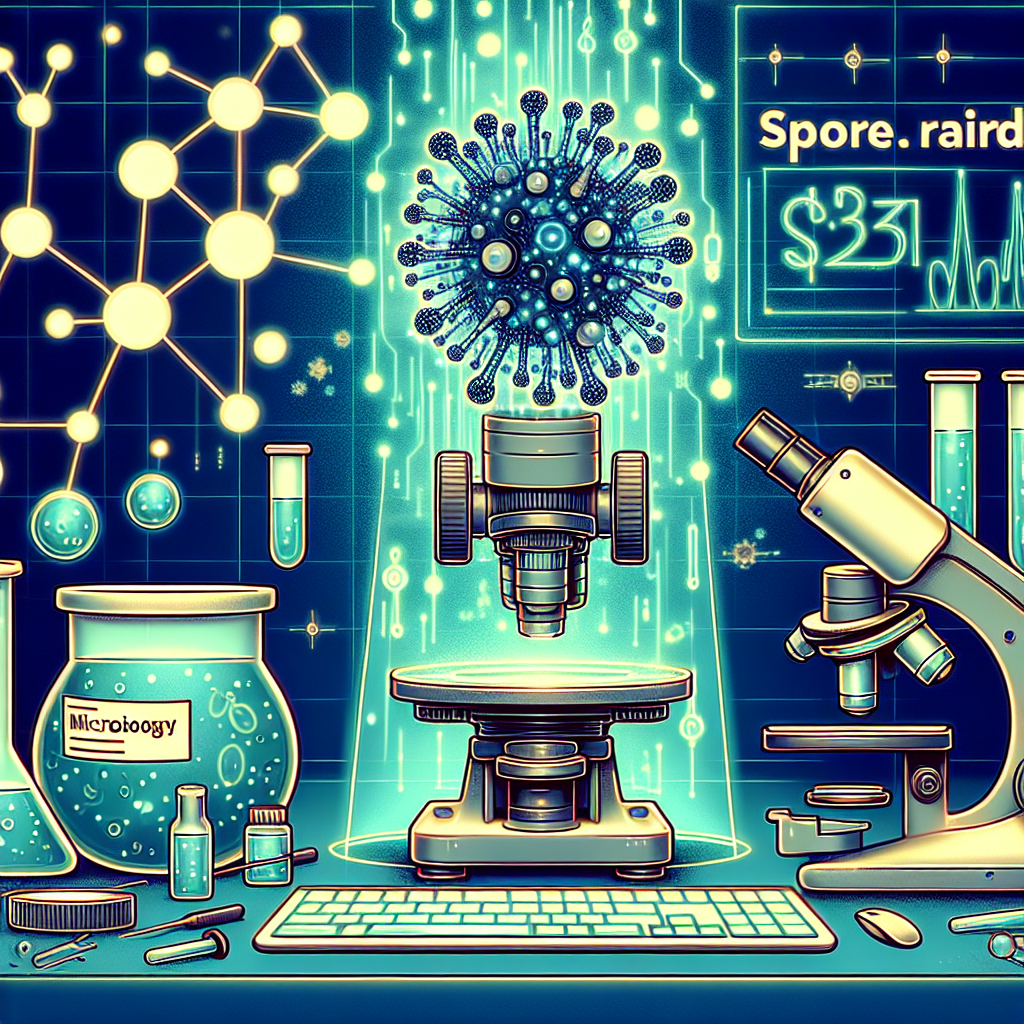
How Spore.Bio’s $23M Funding is Revolutionizing Microbiology Testing with Machine Learning
In the world of cutting-edge technology and scientific breakthroughs, every day presents an opportunity for innovation to change our lives. One of the most exciting recent developments is the announcement by Spore.Bio, a trailblazer in biotechnology, that it has raised $23 million to enhance microbiology testing by applying sophisticated machine learning algorithms. But what does this mean for the world of science and technology, and why should we care?
In this special feature, we’ll delve deep into the details of Spore.Bio’s latest funding success and explore how machine learning is setting the stage for a profound transformation in microbiology testing.
A New Era in Microbiology with Spore.Bio
Spore.Bio stands at the intersection of biology and technology, utilizing state-of-the-art machine learning techniques to enhance microbiology testing methods. This interdisciplinary approach promises to improve the speed, accuracy, and affordability of testing, ultimately making it easier to understand and manipulate the microbial world.
What is Spore.Bio?
Spore.Bio is a pioneering biotech company aimed at transforming microbiology testing from a time-consuming and labor-intensive process to a swift and automated procedure. By leveraging the power of machine learning, Spore.Bio aims to create more efficient workflows, leading to faster diagnosis and improved patient outcomes.
Why Machine Learning?
Machine learning, a branch of artificial intelligence, enables computers to learn from data patterns and make decisions with minimal human intervention. This technology is proving invaluable in microbiology to analyze vast amounts of data quickly and accurately, detecting patterns that would be impossible for humans to identify alone.
The Impacts of Spore.Bio’s Funding on the Microbiology Field
The $23 million investment marks a significant milestone for Spore.Bio—and for microbiology as a whole—paving the way for groundbreaking research and innovative applications. Here’s how this funding will enable advancements in microbiology testing:
-
Research and Development: The financial boost will allow Spore.Bio to invest in further research to refine its machine learning algorithms, ensuring they can provide highly accurate microbiological analyses.
-
Scaling Operations: With more resources at its disposal, Spore.Bio can scale its operations to bring its revolutionary testing methods to a broader market, democratizing access to precision microbiology.
- Collaboration Opportunities: Increased funding opens doors for collaboration with research institutions, hospitals, and other tech companies, fostering a community of innovation and shared knowledge.
The Role of Machine Learning in Microbiology
Key Benefits
-
Accuracy and Precision: Machine learning algorithms can identify minute details in microbial compositions, providing insights that can influence treatment decisions in clinical settings.
-
Speed of Analysis: Traditional microbiology tests can take days or even weeks to complete. Machine learning reduces this time to mere hours, enabling faster diagnosis and treatment.
- Cost Efficiency: Automating data analysis can lower the costs associated with microbiology testing by reducing the need for manual labor and minimizing human error.
Real-world Applications
Machine learning’s incorporation into microbiology is revolutionizing several areas:
-
Antibiotic Resistance Testing: By rapidly identifying resistant bacterial strains, machine learning helps in timely decision-making to combat antibiotic resistance.
-
Environmental Monitoring: Machine learning algorithms are adept at analyzing ecological data, assisting in the monitoring of ecosystems and detecting pollution trends.
- Personalized Medicine: With more precise microbial data, healthcare providers can tailor treatments specific to an individual’s microbiome, improving patient care.
The Future of Microbiology Testing
Continued Innovation
Spore.Bio’s funding journey is just the beginning. With machine learning as a catalyst, the field can anticipate ongoing advancements, such as:
- Integration with IoT devices to provide real-time monitoring and data collection.
- Enhanced data-sharing platforms for cross-collaboration and global healthcare improvements.
- Development of autonomous testing labs powered by AI and robotics.
Challenges and Considerations
As with any technological leap, ethical, and practical challenges arise:
- Data Privacy: Protecting the vast amounts of sensitive biological data collected is crucial to maintaining trust and ethical standards.
- Algorithm Bias: Ensuring machine learning models are unbiased and trained on diverse datasets to avoid skewed results.
- Regulatory Approval: Navigating the complex landscape of regulatory approval to bring new technologies into clinical practice seamlessly.
Conclusion
Spore.Bio’s $23 million funding round signals a promising future for microbiology, one where machine learning holds the key to unparalleled advancements. By bridging biology with technology, Spore.Bio is set to redefine how we understand and interact with the microscopic world, offering solutions that are faster, smarter, and more efficient.
As Spore.Bio continues to grow and innovate, the microbiology field—and indeed the broader realm of healthcare and environmental science—stands on the cusp of a transformative era. With machine learning at its core, this new chapter holds endless possibilities for improved health outcomes, enhanced ecological conservation, and a world where microbiology testing becomes an accessible and integral part of scientific discovery.