
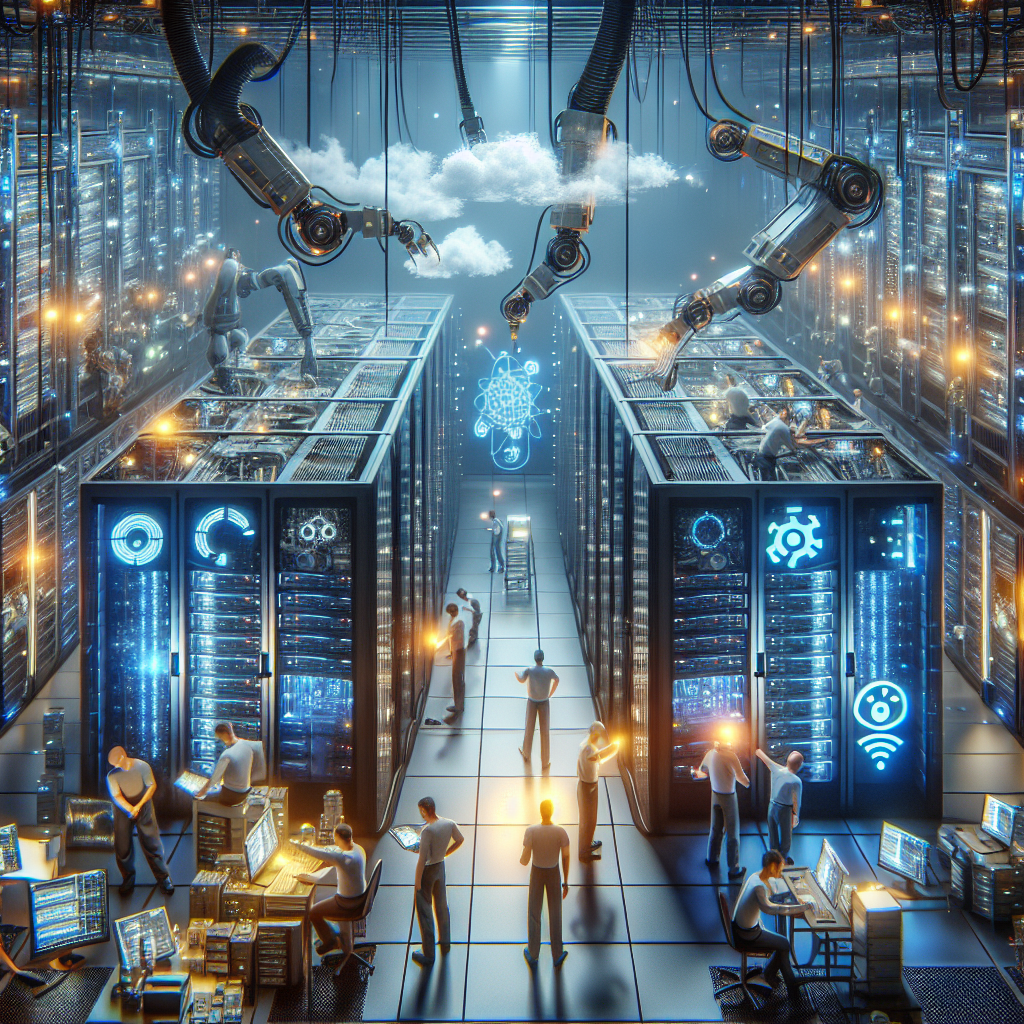
Unlocking 76 GW of New Power Capacity: The Future of Data Centers in the U.S.
In an increasingly digital world, data centers are the backbone of our online lives. They host websites, store data, and are the foundation of cloud services. But what if tweaking these data centers could unlock an additional 76 GW of power capacity in the U.S.? As we delve into the fascinating world of data center efficiency, we’ll explore how these essential facilities are evolving and the immense potential they hold.
The Growing Demand for Data Center Efficiency
The digital revolution has ushered in an unprecedented demand for data storage and processing. As our reliance on technology deepens, so does the pressure on data centers to operate efficiently and sustainably. Here’s why maximizing power capacity is critical:
- Increased Data Consumption: With streaming services, cloud computing, and IoT devices surging in popularity, data consumption has skyrocketed. More data means more power consumption.
- Environmental Considerations: As large power consumers, data centers contribute significantly to carbon emissions. Improving efficiency can reduce their environmental footprint.
- Economic Factors: Power is a major operational cost for data centers. Optimizing power usage can lead to substantial cost savings.
Understanding Data Center Tweaks
Power Usage Effectiveness (PUE)
Power Usage Effectiveness (PUE) is a metric used to determine the energy efficiency of a data center. It is calculated as the total energy consumed by the data center divided by the energy used by the IT equipment. A lower PUE indicates a more efficient data center.
- Standard PUE Rates: The ideal PUE is 1.0, though most data centers have a PUE of around 1.5-2.0. By optimizing PUE, data centers can free up more power capacity.
Advanced Cooling Techniques
Cooling is one of the largest energy consumers within a data center. Implementing advanced cooling techniques can significantly impact energy efficiency.
- Liquid Cooling: By using liquid coolants rather than air, data centers can achieve more efficient heat removal.
- Hot/Cold Aisle Containment: Separating the hot and cold air pathways reduces energy usage in cooling.
Renewable Energy Integration
Switching to renewable energy sources like wind, solar, and geothermal can both bolster power capacity and reduce carbon emissions. Surplus renewable energy can be stored for use during peak demand times.
The Potential Benefits of Optimizing Data Centers
Enhanced Power Capacity
Unlocking 76 GW of power capacity would have far-reaching benefits:
- Support for Growing Industries: Emerging technologies like AI, machine learning, and blockchain are power-hungry. Optimizing data centers would provide the necessary capacity to support these industries.
- Increased Grid Reliability: Freed-up capacity can be used to bolster grid reliability, reducing the risk of blackouts.
Economic Advantages
- Cost Savings: Reduced power usage translates to lower operational costs.
- Job Creation: The shift to more efficient data centers can create jobs in retrofitting, design, and maintenance.
Environmental Impact
- Reduced Carbon Emissions: Energy-efficient data centers mean fewer emissions, aiding in climate commitments.
- Support for Green Initiatives: As power grids transition to more sustainable models, data centers can lead the way.
Challenges and Considerations
Upfront Investment
Transitioning to an optimized data center requires upfront investment in new technologies and infrastructure. It’s crucial for businesses to conduct a cost-benefit analysis to ensure long-term savings outweigh initial costs.
R&D and Workforce Training
- Research and Development: Continued R&D is essential to develop cutting-edge energy-efficient technologies.
- Skill Development: As data centers become more advanced, workers need training in new systems and technologies.
Regulatory Environment
Navigating Regulations: Energy policies at federal and state levels can impact how data centers implement changes. Understanding the legal landscape is essential for organizations making these transitions.
The Road Ahead
Collaboration Across Industries
Unlocking this power potential requires collaboration between IT companies, utility providers, and governing bodies. Sharing knowledge and resources accelerates innovation and implementation.
Future Technologies
Emerging technologies are set to further enhance data center efficiency:
- AI and Automation: AI can optimize energy use by predicting demand and adjusting resources accordingly.
- Edge Computing: By processing data closer to where it’s generated, edge computing can alleviate some pressure on central data centers.
Commitment to Sustainability
As we look to the future, a commitment to sustainability will shape the path forward for data centers. Embracing green technologies not only meets regulatory expectations but also aligns with societal values.
Final Thoughts
The opportunity to unlock 76 GW of new power capacity from data center tweaks is both a challenge and an opportunity. As these facilities become more central to our digital lives, optimizing their efficiency is not only a business imperative but a societal one as well.
In conclusion, the journey toward unlocking 76 GW of new power capacity in U.S. data centers is emblematic of how industries can evolve to meet new demands while safeguarding the planet. By embracing efficiency and sustainability, we can ensure that data centers remain robust and reliable arenas for technological advancement in the years to come.