
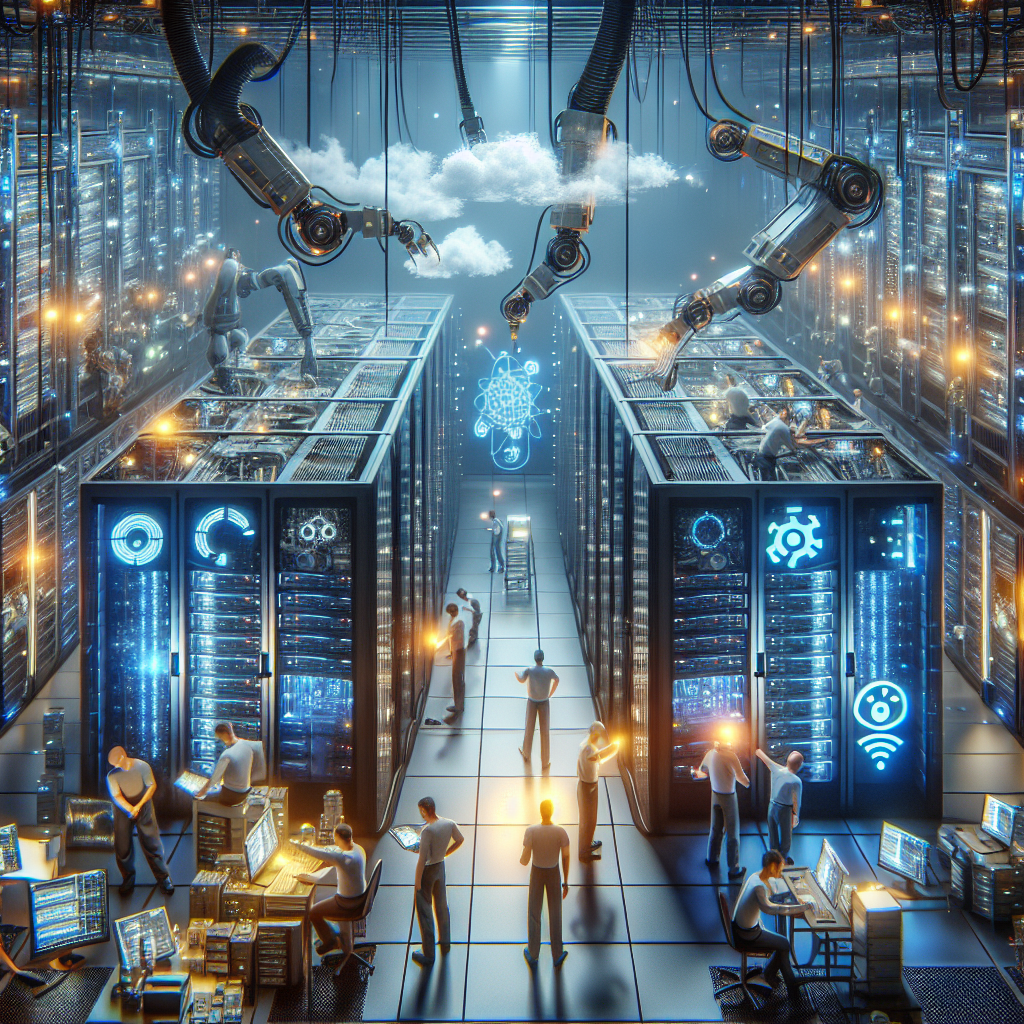
Unlocking Potential: How Data Center Tweaks Could Harness 76 GW of New Power Capacity in the U.S.
In today’s digital age, data centers are the backbone of our information-driven world. They store vast amounts of data, house massive servers, and ensure uninterrupted service for businesses and individuals alike. However, they are also one of the largest consumers of electricity. With rising energy demands and the push for sustainability, data center optimization has never been more crucial. Recent studies suggest that with strategic modifications, data centers in the U.S. could potentially harness an additional 76 gigawatts (GW) of power capacity. But how? Let’s delve into this fascinating subject and uncover the possibilities.
Understanding the Energy Giants: Data Centers
What are Data Centers?
A data center is a specialized facility used to house computer systems and associated components, such as telecommunications and storage systems. These centers are integral to IT operations and serve as the foundation for business productivity.
The Energy Consumption Challenge
Data centers require an immense amount of energy to operate. From cooling systems that prevent overheating to the countless servers processing data all day, energy use is a critical concern:
- Cooling Systems: They can account for up to 40% of a data center’s total energy consumption.
- Servers: Running at full capacity, the servers consume significant amounts of power.
- Backup Power: Essential for protecting against outages, but adds to energy needs.
Power Capacity Optimization: The Key to Unlocking Potential
Potential Gains from Optimization
A thorough analysis has revealed that with certain tweaks, data centers could unlock up to 76 GW of new power capacity. But what kinds of modifications are we talking about?
Energy-efficient Cooling Solutions
- Liquid Cooling Systems: More efficient than traditional air cooling, they can significantly reduce energy consumption.
- Free Air Cooling: Utilizing outside air to cool data centers instead of using purely mechanical systems.
Server Optimization
- Virtualization: Reduces the number of physical servers needed by allowing multiple virtual servers to run on a single physical server.
- Advanced Algorithms: Predict and reduce unnecessary workload, optimizing server performance and power usage.
Renewable Energy Integration
- Solar Power: Installation of solar panels to provide a sustainable power source.
- Wind Energy: Harnessing wind to provide clean, renewable energy to data center operations.
The Economic and Environmental Impact
Economic Benefits
Optimizing energy use not only provides environmental benefits but also significant cost savings:
- Reduced Operational Costs: Energy-efficient designs and technologies can greatly reduce electricity bills.
- Long-term Investments: Implementing state-of-the-art technology might require upfront costs but pays off in the long run with reduced energy usage and maintenance needs.
Environmental Considerations
Data center optimization can dramatically lower the carbon footprint associated with energy consumption:
- Reduced Emissions: Efficient energy use translates directly into fewer greenhouse gas emissions.
- Sustainable Practices: Encourage the broader adoption of green practices within tech industries.
Implementing Changes: Challenges and Solutions
Overcoming Initial Barriers
Transitioning to optimized systems isn’t without its challenges, but they can be addressed:
- Cost Concerns: Initial investments can be steep. However, financing options and subsidies for green technology can mitigate these expenses.
- Technological Integration: Ensuring new technologies work seamlessly with existing systems. Proper planning and phased implementations can smooth this process.
The Future of Data Centers: Towards Sustainable Growth
Encouraging Innovation
The tech industry needs to continue encouraging and investing in the development of cutting-edge solutions for energy efficiency.
Collaboration Across Sectors
Public and private sectors, along with educational institutions, can collaborate to drive research, share solutions, and provide training for energy-efficient technologies.
In conclusion, the untapped potential of 76 GW through data center tweaks underscores a significant opportunity for both economic gain and environmental stewardship. By embracing technology innovations, investing in sustainable practices, and fostering collaboration, the U.S. can lead the charge towards a future where data centers are not only powerful but also sustainably efficient. The path to unlocking this potential is challenging but incredibly rewarding, propelling industries into a greener, more cost-effective future.