
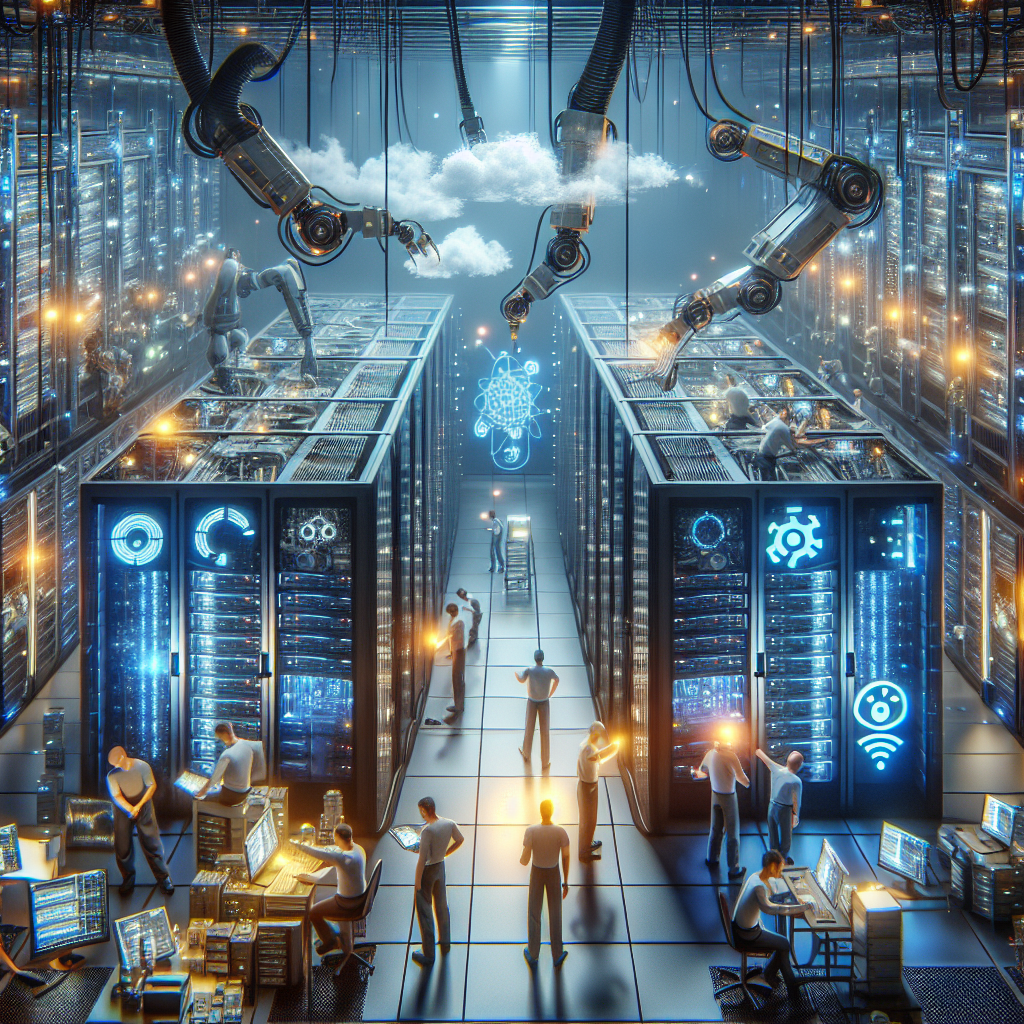
Unleashing an Energy Revolution: How Tweaks in Data Centers Could Unlock 76 GW of New Power Capacity in the U.S.
As the digital age intensifies, data centers become increasingly crucial. But did you know strategic enhancements in these systems could free up an astounding 76 GW of power capacity across the United States? That’s enough electricity to power tens of millions of homes! This revelation conjures images of endless potential not only in technology but also in sustainable and efficient energy consumption. With this emerging knowledge comes a plethora of opportunities and challenges which will be the focus of this article.
Introduction: The Power Play of Data Centers
The digital infrastructure surrounding data centers serves as the backbone of our modern economy. Every click, every video streamed, every email sent relies on these vital operations centers to process and store data. However, their role as heavy energy consumers is equally critical. Considering the rapidly growing digital footprint, unlocking new power capacity by tweaking these centers offers both economic and environmental benefits.
In this ever-humming realm of whirring servers and blinking lights, the incorporation of energy-saving measures holds potential for massive transformations. This article will delve into what these tweaks entail and how they might be instrumental in tackling one of modern civilization’s most pressing challenges: energy consumption.
Understanding Data Centers and Their Energy Dynamics
What Are Data Centers?
Before exploring the energy-saving possibilities, it’s essential to understand what data centers are. They are facilities that house a substantial number of machines known as servers that store, manage, and disseminate data for businesses. Data centers can be considered the digital "fields" through which the “information crop” is grown, harvested, and distributed.
Their components include:
- Physical Servers: The machines that contain data.
- Networking Devices: Routers, switches, and firewalls that manage data flow.
- Cooling Systems: Equipment to control temperature and prevent overheating.
- Power Supplies: Systems ensuring power reliability.
Energy Footprint of Data Centers
Data centers are notorious for significantly high energy consumption, primarily due to:
- High-Performance Servers: Constant running of energy-intensive servers.
- Cooling Requirements: A major chunk of energy is used in cooling systems to maintain optimal operating temperatures.
- Redundancy Systems: Additional systems to ensure uptime and reliability.
Studies show data centers in the U.S. consume over 90 billion kilowatt-hours of electricity a year, equivalent to the annual output of about 34 large coal-fired power plants. This immense power usage encourages the need for innovative strategies to cut energy consumption while preserving performance.
Unlocking 76 GW: The Tweaks to Consider
Advanced Cooling Techniques
Cooling is one of the most electricity-draining operations in data centers. Innovative cooling techniques could save up to 40% of energy consumption:
- Liquid Cooling: Direct application of a cooling liquid to server racks improves energy efficiency compared to traditional air conditioning systems.
- Free Cooling: Utilizes outside air for cooling purposes in climates where outdoor temperatures are cooler, reducing dependence on air conditioning.
Optimization of IT Equipment
Streamlining IT equipment efficiency aids in reducing energy wastage:
- Server Virtualization: Consolidating multiple server applications onto fewer physical machines reduces both idle energy consumption and cooling demands.
- Adaptive Software: Employ predictive algorithms to manage server loads efficiently, ensuring a reduction in energy when demand is low.
Embracing Renewable Energy Sources
Shifting towards renewable energy aligns both economic and environmental benefits:
- Solar Panels and Wind Turbines: Implementing these on or near data center sites promotes sustainability.
- Power Purchase Agreements (PPA): Engage in agreements to buy renewable energy directly from suppliers, reducing dependence on traditional power sources and promoting renewable energy markets.
Economic and Environmental Benefits
Economic Gains
Transitioning to energy-efficient data center operations is not only an environmental exercise but a boon for economic profitability:
- Reduced Operational Costs: Lowered energy costs directly influence a company’s bottom line.
- Increased Capacity Growth: Freed-up energy can be redirected to facilitate growth, computing advancement, and new developments.
Environmental Impact
Carbon footprint reduction can be a realized dream through energy-efficient advancements:
- Decreased Emissions: Optimization could significantly cut greenhouse gas emissions.
- Increased Sustainability: A step forward for companies in meeting ESG (Environmental, Social, and Governance) criteria and achieving sustainability certifications.
Conclusion: A Gateway to a Sustainable Future
Data centers are pivotal in an interconnected world, but they also stand as pillars of opportunity in the transition toward energy-efficient and sustainable futures. Unlocking 76 GW of new power capacity isn’t just possible; it’s vital for progress.
From advanced cooling techniques and IT optimization to embracing renewables, the roadmap to transformation is clear. Companies paving the way forward may find themselves not only with bountiful energy reserves but also as champions of a sustainable future. The changes may start small, but the impacts could echo through the digital age’s course, carrying us toward more sustainable habits as our high-speed dependency on data center functions continues to grow.