
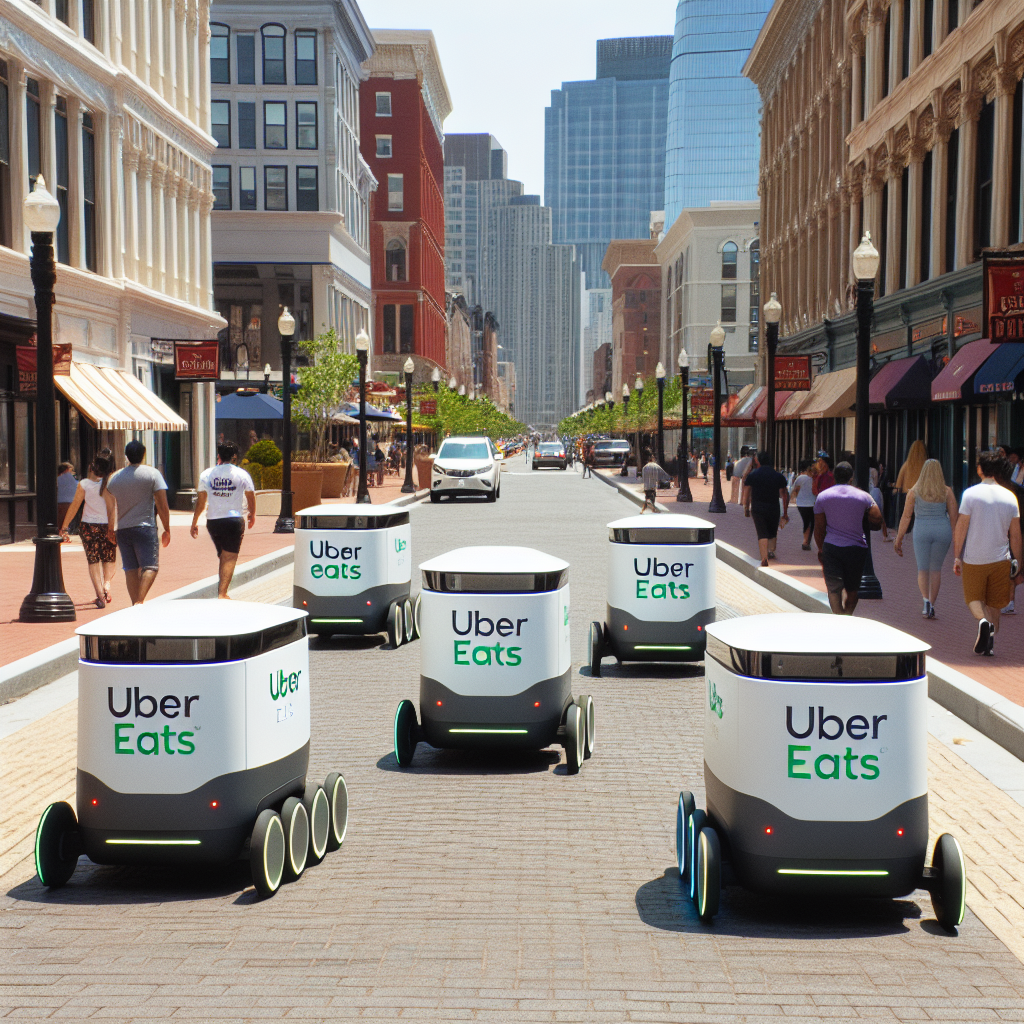
Avride’s Sidewalk Delivery Bots: A Game Changer for Uber Eats in Jersey City
In the ever-evolving world of food delivery, innovation and efficiency stand at the forefront. Recently, Avride has rolled out its futuristic sidewalk delivery bots on Uber Eats in Jersey City, poised to redefine the way we receive our meals. This initiative marks not only a leap in delivery technology but also a promising shift towards sustainability and upgrading customer experience. Let’s dive into how these delivery bots function and how they might impact the community and food delivery ecosystem.
The Rise of Delivery Bots: A Brief Overview
The Need for Automation in Food Delivery
With urban populations expanding and the demand for quick, reliable food delivery services increasing, companies are seeking innovative ways to enhance their delivery infrastructure:
- Faster Delivery Times: Reducing the time it takes for food to reach the customer by targeting high-density areas with traffic-free routes.
- Cost-Effectiveness: Cutting down on the labor costs associated with traditional delivery methods.
- Environmental Benefits: Promoting green technology through electric and robotic alternatives to fuel-driven vehicles.
Avride: Pioneers in Robotics and Delivery Technology
Avride, a forefront player in tech innovations and robotics, has been developing autonomous delivery solutions to cater to the modern gig economy. Their latest launch with Uber Eats signifies a long-term vision to integrate robotics into everyday logistics.
How Avride’s Delivery Bots Work
The Technology Behind the Bots
The delivery bots are equipped with advanced navigation systems and AI technologies to ensure safe and efficient delivery.
- Advanced Sensors: Use LIDAR and ultrasonic sensors to detect and avoid obstacles.
- GPS Precision: Incorporates high-precision GPS for accurate navigation around urban landscapes.
- AI Processing: Facilitates real-time decision-making capabilities allowing bots to traverse sidewalks and public spaces autonomously.
User Experience: Ordering and Receiving Deliveries
Ordering through Uber Eats with the bots is seamless and mirrors the normal order process but includes a touch of innovation:
- Place an Order: Use the Uber Eats app as usual to place your order.
- Track Your Bot: Real-time tracking provides updates on when the bot will arrive.
- Collecting Your Meal: Once the bot arrives at your location, a unique code allows you to unlock its compartment and collect your order.
Ensuring Safety and Security
To address concerns regarding potential hurdles and safety issues:
- Cameras and Alarms: Bots are equipped with cameras and alarm systems for security and deterrence against theft.
- Continuous Monitoring: Operators can monitor bots remotely to ensure smooth operations.
Benefits of Sidewalk Delivery Bots
For Customers
- Convenience and Speed: Asynchronous delivery options where users can receive their meals directly without interaction.
- Reliability: Mitigates delays often caused by road traffic and enhances predictability.
- Contactless Delivery: Heightened in importance amid health-conscious times promoting socially distant interactions.
For Businesses
- Reduced Overheads: Less reliance on gig economy drivers translates to fewer personnel costs.
- Scalability: Ability to serve broader areas simultaneously, optimizing delivery flow.
- Competitive Edge: Embracing innovation helps businesses differentiate themselves from competitors.
Environmental Impact
- Reduced Carbon Footprint: Electric-powered bots reduce emissions compared to traditional delivery vehicles.
- Less Urban Congestion: Minimizing street traffic by utilizing sidewalk and pedestrian routes.
Challenges and Considerations
While the introduction of sidewalk delivery bots is brimming with potential, there are challenges to be addressed:
Infrastructure Readiness
- Sidewalk obstacles such as broken pavements or construction zones that may impede bot navigation.
- Coordination with local municipalities for safe and efficient use of public spaces.
Public Acceptance
- Cultural acceptance and adaptation by the local population may vary, with some individuals unfamiliar with autonomous technology.
- Education and advocacy might be necessary to foster trust and understanding.
Technological Limitations
- Dependence on weather conditions, which could affect electronic components and navigation accuracy.
- Battery life and power management could limit the range of deliveries bots can efficiently make.
Future Prospects and Conclusion
What Lies Ahead for Avride and Uber Eats
Avride’s venture with Uber Eats delivers promising prospects not just for Jersey City, but for the broader scope of food delivery across the globe. This implementation is a pilot test, driving data collection and learning to further refine the capabilities of delivery bots.
Final Thoughts
As technology reshapes industries, Avride’s sidewalk delivery bots present an exciting glimpse into the future. Embracing automation and AI-driven solutions seems inevitable as the need for efficient, sustainable services grows. Communities like Jersey City stand at the cutting edge of receiving the benefits while simultaneously crafting a norm that balances innovation with tradition.
Enhanced delivery experiences accompanied by minimal environmental impacts truly depict Avride as an entity directing us towards smarter urban living. Let’s watch as the city adapts and perhaps inspires others to explore similar paths.