
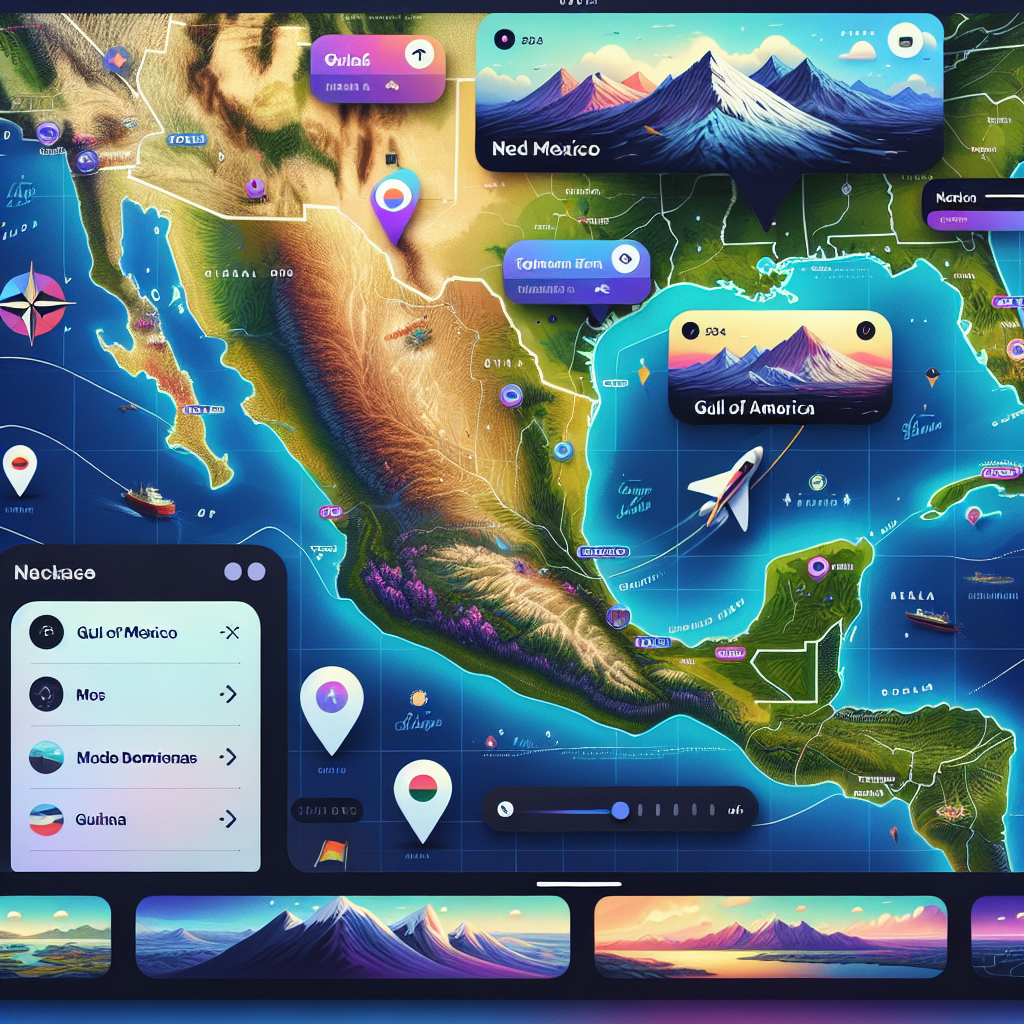
Apple Maps Makes Waves: Plans to Show ‘Gulf of America’ Following Google’s Move
In an exhilarating leap towards redefining digital cartography, Apple Maps is reportedly set to embrace a more culturally and geographically resonant nomenclature by labeling the water body separating the United States and Mexico as the “Gulf of America.” This strategic alignment follows Google’s recent decision, sparking a fascinating dialogue that traverses both geographical awareness and digital representation. As we dive into this compelling narrative, let us explore the motivations, implications, and responses to such a monumental change in the cartographic lexicon.
The Motivation Behind the Change
In the age of digital mapping, terminology plays a pivotal role in shaping public perception and national identity. The move by Apple Maps to adopt the term "Gulf of America" isn’t just a mere change for nomenclature’s sake. Several factors underpin this decision:
Cultural Significance
- Connecting with Users: The term "Gulf of America" might resonate more profoundly with American users, fostering a sense of ownership and connection.
- National Identity: It underscores a subtle reassertion of national identity for states around the Gulf, often overshadowed by the historical and cultural significance of the term "Gulf of Mexico."
Market Dynamics and Alignment
- Following a Leader: Following Google’s lead allows Apple Maps to stay competitive and relevant, showing users they are adaptive and culturally sensitive.
- Consumer Preferences: By tapping into user preferences and potential shifts in name recognition, Apple can better cater to user demand and geographical education.
The Broader Implications
Digital map naming has broader implications than one might assume. This isn’t just about a name on a map—it’s about the narratives these tech giants support and propagate.
Political Repercussions
- International Relations: Adjusting geographical names can have political ripple effects, potentially impacting international relations.
- Domestic Reactions: While some American citizens may welcome the change, others might see it as a redundancy or a slight against traditional names.
Educational Impact
- Geographical Literacy: Altering map nomenclature might push educators to redefine certain aspects of geographical literacy.
- Historical Context: The change provokes a reflection on historical influences and whether they should be preserved or evolved.
Responses to the Change
As with any significant alteration in public or digital spaces, responses can be as diverse as they are vocal.
Public Opinion
- Social Media Buzz: Platforms may erupt with debates between traditionalists and advocates for modern representation.
- User Feedback: Early user reviews and comments will offer immediate insights into the public’s reception of the change.
Governmental Voices
Governments on both sides of the Gulf might weigh in, each potentially offering distinct viewpoints reflecting their stance on national and regional identity.
Industry Experts and Geographers
- Expert Opinions: Cartographers and geographers may offer insights into how such changes impact the discipline of geography as a multi-faceted study.
- Future Trends: This change might spur further discussions on other continental landmarks ripe for renaming to reflect changing sociopolitical climates.
What Lies Ahead?
Predicting the long-term effects of such a change isn’t straightforward. However, we can anticipate several potential outcomes.
Technological Evolution
- Adaptive Maps: Future maps may become more interactive, allowing users to toggle between traditional and contemporary names.
- Advanced Features: AI could play a pivotal role in providing users with historical context and narratives behind geographical names.
Societal Shifts
- Increased Awareness: As users of digital maps become more involved in naming debates, there might be a heightened awareness and understanding of how geography plays into cultural identity.
- Cultural Sensitivity: Tech companies might take larger steps towards ensuring cultural sensitivity and inclusivity in digital products.
Conclusion: A Map Not Just of Territory but of Time
Apple Maps’ decision to use "Gulf of America" is emblematic of a broader trend in which digital platforms reconsider their role as cultural cartographers. This isn’t merely about re-orienting maps; it’s about re-orienting mindsets and inviting users to think critically about the narratives encapsulated within those digital boundaries.
This dialogue between tradition and innovation, history and modernity is what makes the discourse around digital cartography so rich and relevant. As consumers of these digital territories, users are invited not just to navigate spaces, but to engage with the stories behind each label and mark on the map.
With such a transition embraced by Apple Maps following Google’s lead, the world of digital cartography continues to show us that even in an age of satellites and digital interconnectivity, the stories we tell about our world remain as integral as the spaces we inhabit.