
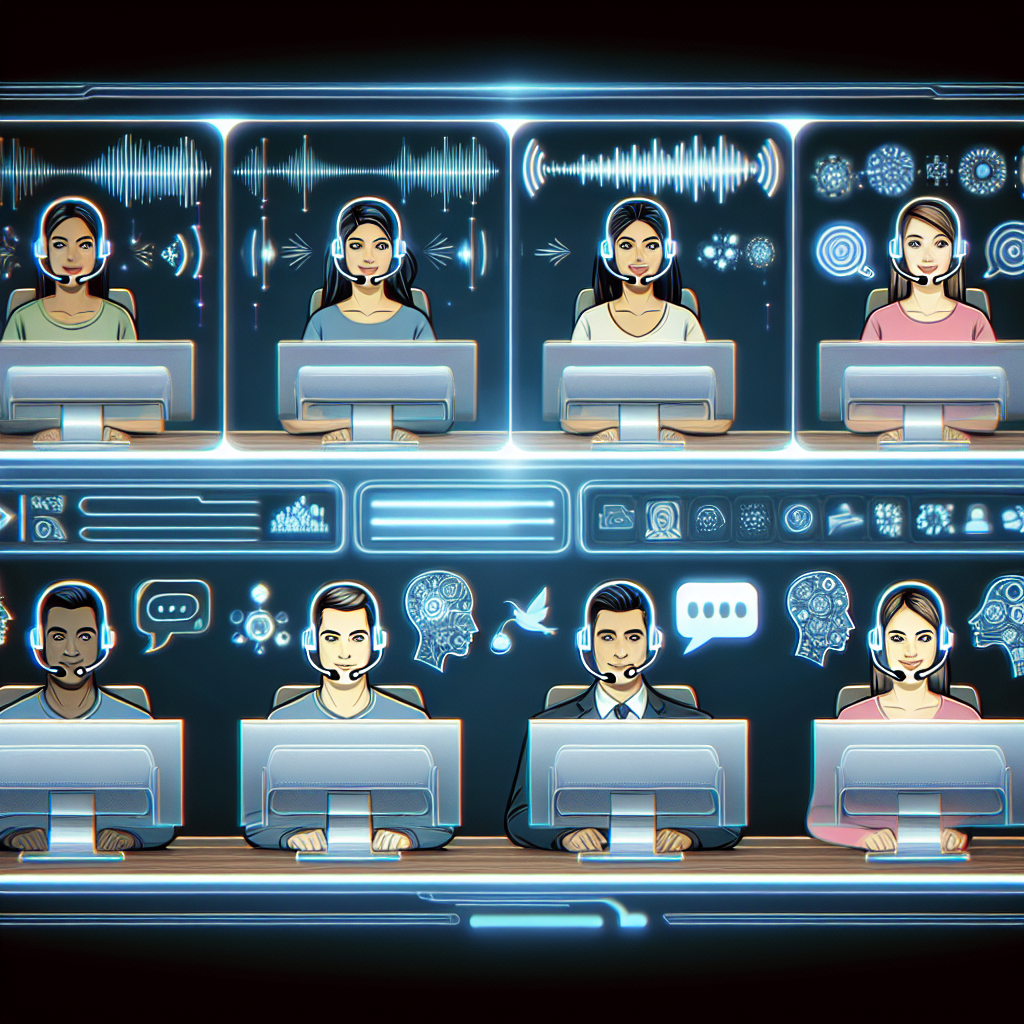
Revolutionizing Communication: How Sanas’ AI Transforms Call Center Accents in Real-Time
The advancement of Artificial Intelligence (AI) is reshaping numerous industries, with the call center sector being a notable example. One innovative company, Sanas, has developed a groundbreaking AI technology designed to transform call center workers’ accents in real-time. This revolutionary solution aims to bridge communication gaps and improve customer relationships, emphasizing the importance of understanding and empathy in customer service. How does this technology work, and what implications does it have for the future?
A New Era in Customer Service Experience
Why Accents Matter in Customer Service
In today’s interconnected world, call centers often serve a global customer base. This has brought about a unique challenge: variations in accents. While diversity in accents is a cultural treasure, it sometimes impedes clear communication, leading to misunderstandings and dissatisfaction among customers.
- A universal accent can reduce misunderstandings.
- It promotes faster problem resolution.
- Enhances customer satisfaction and brand reputation.
Customer service is all about making the client feel heard and valued. When communication barriers arise due to accent differences, customers might feel less confident in the service provider’s ability to meet their needs. This is where Sanas comes into play.
Sanas: The Company Behind the Innovation
Founded by developers passionate about cultural inclusivity, Sanas is a leader in speech synthesis technology. The company’s mission is to foster seamless communication across language barriers by utilizing cutting-edge AI algorithms.
Their real-time accent transformation tool demonstrates:
- A commitment to enhancing user experience.
- Utilization of AI to enrich human-to-human interaction.
- Support for a culturally diverse workforce.
Delving Into the Technology
How Does the AI Accent Translation Work?
The technology developed by Sanas is based on sophisticated machine learning models capable of altering spoken accents without changing the original words or meaning. Here’s how it works:
-
Speech Input: The AI starts by accepting voice input from the call center agent.
-
Accent Detection: It detects the speaker’s accent using complex linguistic pattern recognition.
-
Real-Time Conversion: The detected accent is then altered to a more neutralized or targeted accent in real time.
- Revised Output: This modified speech is transmitted to the listener seamlessly, as if it were the natural voice of the speaker.
This four-step process occurs almost instantly, ensuring a smooth conversation flow between agents and customers.
Key Features of Sanas’s Technology
-
Zero Latency: The AI processes accents in real time without delay.
-
Cultural Sensitivity: Instead of eliminating accents, it neutralizes them, respecting cultural nuances.
- Customizable Outputs: Call centers can choose accents that align better with their customer demographic.
Exploring the Benefits for Stakeholders
For Call Center Agents
Agents in call centers frequently face challenges from having their accents misunderstood, leading to stress, loss of confidence, and job dissatisfaction. With Sanas’ technology:
- Agents can focus on problem-solving rather than repetition.
- They gain confidence that language will not be a barrier to customer service excellence.
- The AI reduces the cognitive load and emotional stress of communication mishaps.
For Customers
Customers frequently become frustrated when they feel unheard or misunderstood due to accents. With AI-powered accent transformation:
- Customers experience clearer communication.
- There’s a decrease in repeated information requests.
- Overall satisfaction and customer loyalty tend to increase.
For Call Center Management & Companies
In addition to direct customer and agent benefits, the companies themselves stand to gain:
-
Enhanced Efficiencies: Faster, more effective calls.
-
Cost Savings: Reduced training time for accent neutralization.
- Diverse Workforce: Encouraging talent with varied linguistic backgrounds without compromise.
The Ethical Considerations
While the advantages are compelling, ethical concerns must not be ignored. Questions surrounding identity and linguistic diversity are critical:
-
Cultural Identity: There are concerns that modifying accents might erode cultural identity.
- Diversity Inclusion: Equating neutral accents with quality might discourage diversity in expression.
The Future of AI in Customer Service
The journey of refining communication in call centers is only beginning. As this technology garners widespread acceptance, future developments could include:
-
Emotional Recognition: Beyond accents, detecting emotional tones to further enhance customer experiences.
-
Multilingual Support: Expanding capabilities to handle seamless language translations in real time.
- Deep Personalization: Tailoring communication styles to individual customer preferences.
Conclusion
Sanas’ innovative accent translation technology represents a significant stride in connecting the world through better communication. As AI continues to advance, the potential benefits are limitless—for individuals, businesses, and society as a whole. While we must navigate the ethical landscape carefully, there is no denying that real-time accent adaptation is destined to become a cornerstone of global customer service excellence.
For businesses intent on leveraging the most advanced tools to foster better relationships and enhance user experiences, Sanas provides a remarkable glimpse into a more connected, communicative future. Whether you’re a stakeholder, customer, or technology enthusiast, the possibilities unveiled by this technology are as vast as they are exciting.